Sunday, June 28, 2026
He Used Claude Code to Analyze His MRI. The AI Said the Radiologist Was Wrong.
Posted by
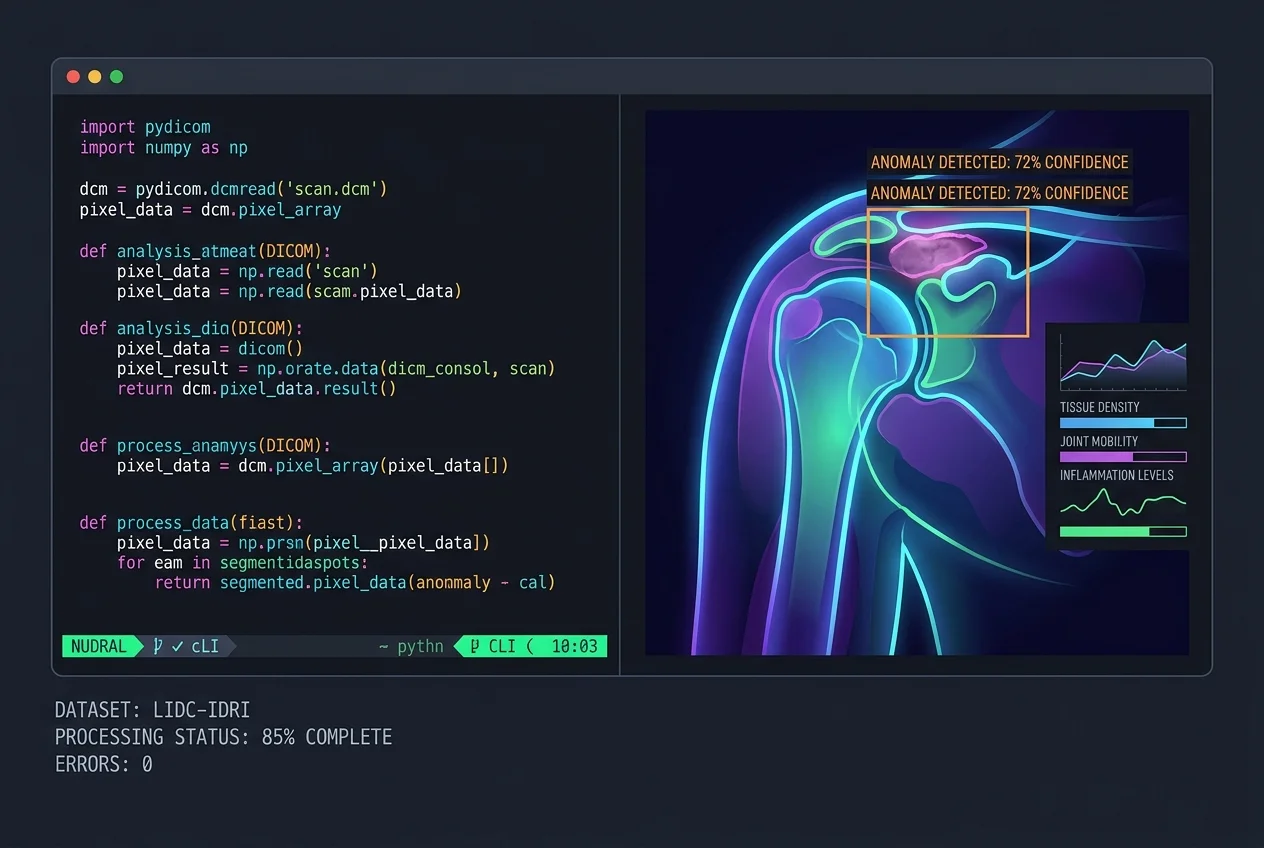
June 28, 2026 — A developer named Antoine had right shoulder pain for two weeks. He got an MRI. The radiologist diagnosed a Grade III partial-thickness tear of the subscapularis tendon — over 50% of the tendon width, torn at the insertion point. The treatment plan included shockwave therapy and Traumeel injections, scheduled to repeat three times.
Something felt off. So Antoine did what any developer would do: he opened Claude Code and fed it the raw MRI data.
This is not a story about medical AI. It's a story about what happens when a tool designed for software engineering becomes the most accessible way to get a second opinion on a medical diagnosis.
What He Actually Did
Here's the technical setup, because this is what makes the story interesting:
- Input: Raw DICOM export from his MRI — 266MB of hundreds of extensionless files stored in medical imaging format.
- Tool: Claude Code running Opus 4.8 (xhigh reasoning mode).
- Instruction: Just "right shoulder pain for 2–3 weeks." No clinical history. No radiologist report. No hints.
- Method: Claude Code installed pydicom, wrote a processing script, built a plan, and analyzed the imaging stack frame by frame.
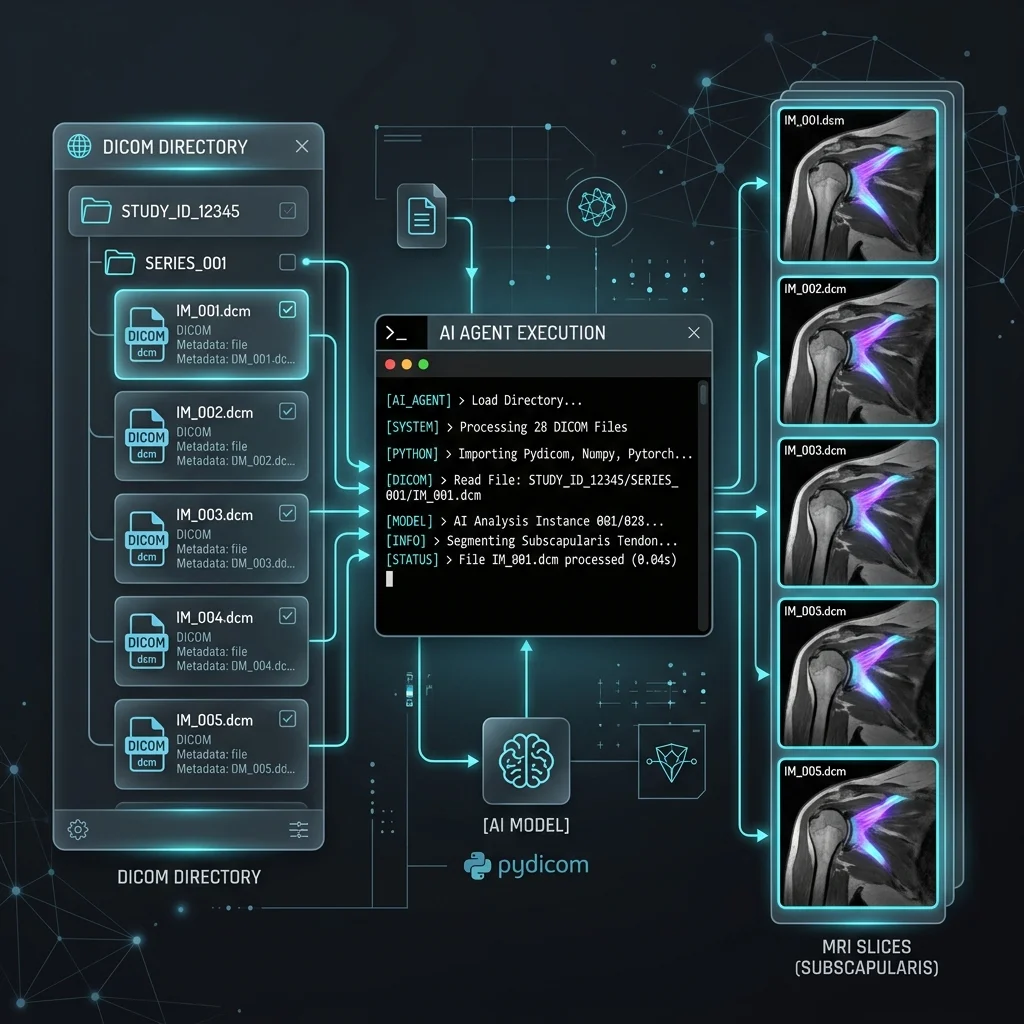
The author is specific about one thing: this was Claude Code, not the Claude.ai chat interface. And the performance difference, he says, was "enormous." A chat interface can look at images you upload. An agentic coding tool can install dependencies, write scripts, iterate on its approach, and process 266MB of structured data without choking. That's the gap.
Claude Code's conclusion: the subscapularis tendon was intact.
The Arbitration Phase
Antoine didn't stop there. He ran what amounts to a multi-agent adjudication pipeline:
-
First pass — GPT 5.5 Pro reviewed the treatment plan (not the images) and flagged two concerns: shockwave therapy for a non-calcific tendon issue contradicts recent clinical guidelines, and Traumeel is classified as a homeopathic remedy in Germany with no therapeutic indication.
-
Second pass — Opus 4.8 via Claude Code analyzed the raw DICOM data cold, with no clinical context. Conclusion: intact tendon.
-
Arbitration — A new Claude Code session compared the human radiologist report, the GPT discussion, and the raw MRI data together, using multiple sub-agents to generate fresh analyses and cross-check them.
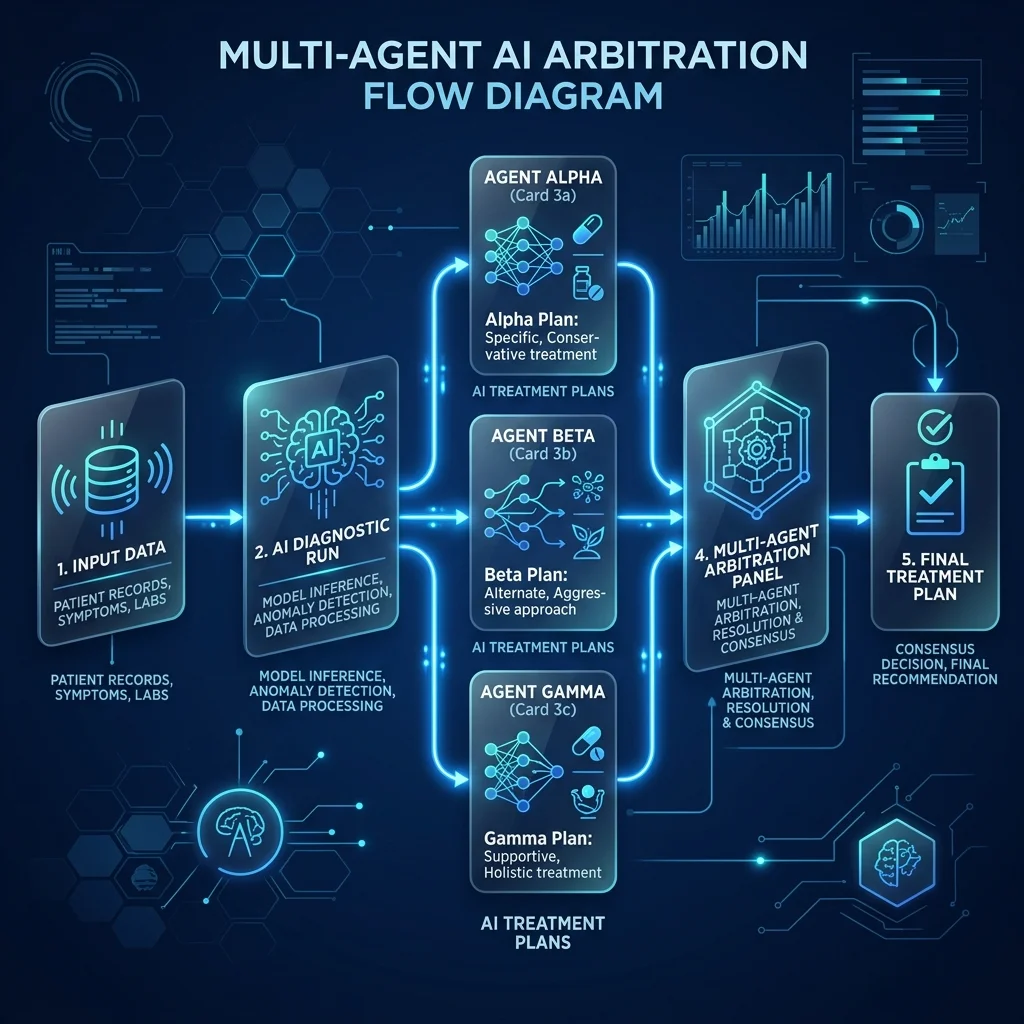
The arbitration verdict: "Evidence favours Reader A (moderate-to-high confidence). Mild insertional tendinosis; NO discrete partial- or full-thickness tear identified, including at the apical insertion."
A coding tool told him the radiologist was wrong on the core diagnosis, correctly identified the limitations of his prescribed treatment, and did it with enough specificity and process that he's now seeking a third medical opinion rather than just dismissing it.
The Gap This Story Exposes
There's an obvious disclaimer here that I'm going to state plainly: Claude Code is not FDA-approved. It is not HIPAA-compliant by default. It is a coding tool. The AI could be wrong. The human doctor could be wrong. Do not make medical decisions based on what your terminal spits out.
But that disclaimer is also the point. Antoine used Claude Code not because someone told him to, but because it was the best tool available for what he needed. He needed to process a complex, multi-file data format that standard tools can't open. He needed to reason about visual medical data against clinical guidelines. He needed an agent that could install packages, write code, iterate on its approach, and produce a structured output.
Claude Code does all of that. It's just that none of those use cases were the intended design.
This is part of a broader pattern. The Shopify CEO used Claude to build a custom MRI viewer from a USB stick because the hospital-provided software required Windows. Radiologists are now publishing papers about "vibe coding in radiology" — using Claude Code and Codex to build quick diagnostic tools without formal software engineering training. A pydicom skill for Claude Code recently appeared on MCP Market, offering implementation patterns for extracting pixel data from CT, MRI, and X-ray scans.
The tool is being repurposed because its core competency — structured data analysis with code execution — maps directly onto medical imaging workflows. The fact that it's called "Claude Code" and lives in the terminal doesn't change what it actually does.
The Accountability Vacuum
Here's the uncomfortable question this story raises: if a coding tool can meaningfully challenge a medical diagnosis, and it costs $20/month instead of a $500 specialist copay, what happens next?
The regulated medical AI space is slow, expensive, and conservative by necessity. FDA clearance for a diagnostic AI tool takes years and millions of dollars. Anthropic, to its credit, has been investing in the regulated path — launching Claude for Healthcare with HIPAA-compliant infrastructure, CMS connectors, and clinical trial tools. But that's enterprise healthcare, served through formal channels.
What Antoine did is not that. It's one person, in their terminal, with a DICOM export and a subscription. No IRB approval. No clinical governance. No malpractice coverage.
This is the same dynamic we've seen play out in every adjacent space: AI coding assistants got adopted by individual developers long before enterprise compliance teams signed off. The regulated path and the practical path diverge, and people choose the path that works right now.
The Claude Code Multiplier
The author's observation about Claude Code vs. Claude chat is worth pausing on. Both run the same underlying model (Opus 4.8), but the agentic wrapper transforms what's possible:
- Chat can look at individual images you upload, one at a time.
- Claude Code processes a 266MB directory of hundreds of files, installs needed libraries, writes processing scripts, builds a structured plan, and cross-references multiple runs.
This is the same advantage that makes Claude Code useful for codebases of any size. It doesn't just take a prompt — it executes a plan. That capability generalizes beyond code to any domain that involves structured data processing, file manipulation, and multi-step reasoning.
The author puts it well: "There's something incredibly peaceful about being in the hands of an expert you trust. AI can absolutely shatter that feeling in an uncomfortable way."
Where This Leaves Us
I'm not here to tell you that Claude Code is the future of radiology. It's not. The regulatory and reliability gaps are real, and this single anecdote — compelling as it is — doesn't constitute evidence of general capability.
But I am here to tell you that this pattern is accelerating. Every month, more developers find themselves in situations where the coding tool on their machine is the most capable analytical engine they have access to. And every month, the gap between what these tools can do and what regulation covers grows wider.
Antoine's conclusion is honest: he's caught between a human doctor he now doubts and an AI he doesn't fully trust. He's hoping for what most of us want — that AI-assisted analysis becomes as trusted and routine as spellcheck. But we're not there yet.
In the meantime, the Scout's advice is pragmatic: if you or someone you know gets a serious diagnosis, consider it the beginning of the conversation, not the end. And if a coding agent in your terminal can install pydicom and process 266MB of imaging data, maybe that tells you something about where the lines between "coding tools" and "analytical tools" are starting to blur.
Source: Using Opus 4.8 to get a second opinion on an MRI and where it leaves me — Antoine's personal blog, posted June 28, 2026. Discussion on Hacker News.
Disclaimer: This article discusses a personal blog post about one individual's experience. None of this constitutes medical advice. The human doctor could be correct. The AI could be incorrect. Seek professional medical opinions from licensed practitioners.
Related Articles & Deep Dives
 #pxpipe
pxpipe Packs Prompts Into PNGs to Slash Token Costs by 70% — Yes, It Actually Works
The open-source tool pxpipe renders bulky context (system prompts, tool docs, chat history) into compact PNG images, exploiting Anthropic's per-pixel image pricing. Savings of 59–70% on real Claude Code and Fable 5 sessions. Here's how it works, where it breaks, and when you should use it.
 #anthropic
Alibaba Just Banned Claude Code — Here's Why Everyone Is Suddenly Scared of AI Coding Tools
Alibaba has banned employees from using Claude Code starting July 10 over alleged backdoor risks. This follows Meta's distillation-driven ban and Mozilla 0DIN's proof that Claude Code can be weaponized through clean GitHub repos. Three bans in one week — AI coding agents just hit their enterprise trust crisis.
 #meta
#metaYour Rival's AI Is Leaking Into Your Training Data — Meta Just Banned Claude Code and Codex Internally
Meta has instructed engineers to restrict their use of Anthropic's Claude Code and OpenAI's Codex over fears that outputs from those tools could contaminate Meta's own AI training data. The policy, confirmed by internal documents obtained by The Information, is driven by distillation fears, ballooning AI costs, and Meta's push to build its own coding assistant, MetaCode.