The latest blogs
All the latest blogs and news, straight from the team.
10 MCP Servers Every Developer Needs

The essential Model Context Protocol servers for AI coding agents — GitHub, Postgres, Filesystem, Brave Search, Figma, and more — with setup instructions for Claude Code, Gemini CLI, and OpenCode.
Published on June 10, 2026
The AA-Briefcase Benchmark: When Frontier AI Meets Real Knowledge Work

A deep-dive into Artificial Analysis's AA-Briefcase benchmark — how it tests models on realistic multi-week knowledge work projects, why the best model only fully solves 3% of tasks, and what the 800x cost-performance spread means for enterprise deployments.
Published on June 18, 2026
AI Agent Frameworks Compared: LangChain, CrewAI, AutoGen — What's Worth Using in 2026

A practical comparison of LangChain, CrewAI, AutoGen, and smaller agent frameworks. What each does well, what it doesn't, and when to skip the framework entirely.
Published on June 10, 2026
AI Coding Agents Are Now Training Physical Robots — Nvidia's ENPIRE Hits 99% Success

Nvidia, CMU, and UC Berkeley's ENPIRE framework gives Claude Code, Codex, and Kimi Code agents direct control over robot hardware — achieving 99% dexterous grasping success across a fleet of 8 physical robots.
Published on June 16, 2026
AI Regulations & Compliance: What Developers Need to Know in 2026

A practical guide to the EU AI Act, US regulatory landscape, copyright and AI training data, and what developers building with AI need to do to stay compliant.
Published on June 10, 2026
Rules File Backdoor: A New Vulnerability in AI Coding Assistants

Learn about a critical vulnerability in AI coding assistants that allows attackers to inject malicious code through seemingly innocent configuration files.
Published on April 7, 2025
Apple Foundation Models Framework — Setup Guide

Complete setup and integration guide for Apple Foundation Models — the native Swift API for on-device, Private Cloud Compute, and third-party LLMs including Claude. iOS 27+, macOS 27+, visionOS 27+.
Published on June 14, 2026
When Chain-of-Thought Works — and When It Backfires

Chain-of-thought prompting improves accuracy on math and logic by 25% or more, but hurts on simple tasks and creative work. Learn when to use CoT with real examples and a practical decision framework.
Published on June 4, 2026
Anthropic brings Artifacts to Claude Code — sharing interactive pages from coding sessions

Claude Code can now turn session output into shareable, interactive web pages called artifacts. Complete guide to how it works, what you can build, sharing and permissions, and practical use cases for teams.
Published on June 17, 2026
Claude Code vs Gemini CLI vs OpenCode: Which AI Coding Agent Is Right for You?

Head-to-head comparison of the three leading terminal AI coding agents. Pricing, models, context windows, privacy, and when to pick each tool.
Published on June 10, 2026
DeepSeek Introduces Vision — What It Adds to the Chat Experience

DeepSeek has launched Vision mode in its chat product, adding image understanding to one of the strongest open-weight model families. This guide covers what Vision mode supports, how it compares to GPT-4V, Gemini Vision, and Claude Vision, and what it means for the open-weight landscape.
Published on June 17, 2026
DiffusionGemma: How Text Diffusion Breaks the LLM Memory Wall

Google's DiffusionGemma uses parallel discrete diffusion instead of autoregressive token prediction — 1,000+ tokens/sec on H100, 700+ on RTX 5090. Architecture, benchmarks, serving setup, and what this means for developers building agents.
Published on June 14, 2026
The End of Manual Documentation

How AI is changing technical writing — what's automated, what needs humans, and how teams should adapt their docs workflow in 2026.
Published on June 10, 2026
"We Created a Monster" — The Enterprise AI Cost Crunch Is Here and It's Spreading

Amazon, Walmart, Uber, Microsoft — the companies that raced to put AI in everyone's hands are now scrambling to pull it back. The Financial Times broke the story: enterprise AI costs are straining budgets so badly that early adopters are introducing caps, canceling licenses, and discouraging usage. A deep dive into the numbers, the drivers, and what it means.
Published on June 18, 2026
Zero-Touch OAuth for MCP — Finally, Enterprise Auth That Doesn't Suck

MCP's new enterprise-managed authorization extension eliminates per-server consent screens by putting the corporate IdP in charge. Here's how ID-JAG works, why it kills shadow IT, and what it means for developers building MCP servers behind Okta or Entra ID.
Published on June 17, 2026
Evaluating Prompt Quality: Build an Eval Harness in Python

Stop guessing if your prompts are better. Build an LLM-as-judge harness that scores accuracy, relevance, and faithfulness — with A/B testing to compare prompt variants objectively.
Published on June 9, 2026
Claude Fable 5: Relentless Proactivity and the New Frontier of Agentic AI

A capability analysis of Anthropic's Claude Fable 5 — what 'relentlessly proactive' actually means for agent behavior, its 88% FrontierMath tier 4 score, and what developers need to know.
Published on June 14, 2026
From Chain-of-Thought to Self-Correction: Building Reasoning Loops

Chain-of-thought gets you step-by-step reasoning, but the model never checks its own work. Build a self-correcting loop that critiques and revises with actual Python code and a before/after accuracy comparison.
Published on June 7, 2026
Gemini 2.5 Pro — 2M Token Context, Native Tool Use, and MCP Integration

Technical deep-dive on Google Gemini 2.5 Pro: its 2M token context window, native tool calling over the full context, direct MCP integration in Vertex AI, and what it means for agent architecture. Comparison with GPT-5.5 and Claude Opus 4.6.
Published on June 14, 2026
Gemini-SQL2: Inside Google's State-of-the-Art Text-to-SQL System

Technical analysis of Google Research's Gemini-SQL2 — architecture (schema linking, multi-turn candidate generation, self-correction verification), the BIRD benchmark, and what 80.04% execution accuracy means for developers building natural-language database interfaces.
Published on June 14, 2026
Getting Started with ChatGPT

Learn the basics of prompt engineering with ChatGPT
Published on February 25, 2025
Getting Started with Trae IDE: Free Setup, AI Agents & MCP

Download and set up the free Trae AI IDE. Learn to use SOLO Coder, Builder mode, and MCP server integration. Complete macOS and Windows install guide for faster AI-assisted coding.
Published on November 11, 2025
GLM-5.2 — The New Leading Open Weights Model Is Built for Long-Horizon Agentic Tasks

Z.ai's GLM-5.2 scores 51 on the Artificial Analysis Intelligence Index, making it the top open-weights model. With a 753B MoE architecture, 1M-token context, IndexShare sparse attention, and agentic RL training, here's what developers building long-horizon agents need to know.
Published on June 16, 2026
GPT-4o Image Generation: Revolutionizing Visual Communication

Published on April 14, 2025
Hyundai Finally Owns Boston Dynamics Outright — and Atlas Has a Factory Job Waiting

Hyundai buys out SoftBank's remaining stake for $325M, taking full control of Boston Dynamics. Atlas humanoids head to the Georgia Metaplant floor by 2028 — and this is the clearest signal yet that humanoid robots are moving from viral videos to real production lines.
Published on June 18, 2026
The Ultimate Guide to Mastering Gemini CLI: Your AI-Powered Software Engineering Assistant

An exhaustive guide to installing, configuring, and maximizing Gemini CLI. Learn about advanced sandboxing, custom extensions, CI/CD integration, and how it stacks up against Claude Code and Copilot CLI.
Published on January 22, 2026
Understanding MCP Servers: A Comprehensive Guide

Learn about Model Context Protocol (MCP) servers, their architecture, and best practices for implementation
Published on March 20, 2025
MCP Specification 1.2 — Remote Servers and Authentication

Complete reference guide to MCP Spec 1.2's remote server support with standardized OAuth 2.1 authentication. Covers the auth flow, migration path from local to remote servers, Streamable HTTP transport, and implications for agent architecture.
Published on June 15, 2026
Mirage: Persistent Spatial Memory in Video Generation Models

Microsoft Research's Mirage stores 3D scene information directly in latent space, avoiding pixel-based point clouds. How it works, why it's 10x faster, and what it means for video world models, embodied AI, and agent perception pipelines.
Published on June 14, 2026
MosaicLeaks — When Your Research Agent Can't Keep a Secret

ServiceNow Research's MosaicLeaks benchmark reveals a hard truth: every web query your agent makes could leak private information. Here's how the mosaic effect works, why RL makes it worse before it gets better, and what PA-DR does about it.
Published on June 17, 2026
Odyssey ML Raises $310M from Amazon, Nvidia, and AMD to Build 3D World Models

Odyssey ML raised a $310M Series B at a $1.45B valuation to accelerate world simulation AI. Amazon, Nvidia, AMD, GV, and CIA-linked IQT are backing it. A technical breakdown of what world models are, how Odyssey's Explorer and interactive video technology works, and why hyperscalers are placing bets on physical AI.
Published on June 16, 2026
Google Cloud Open Knowledge Format: Standardizing Knowledge for AI Agents

Complete reference guide to Google Cloud's Open Knowledge Format (OKF) v0.1. How it works, how it compares to MCP, and how to structure agent-readable knowledge bases.
Published on June 14, 2026
OpenAI Agents SDK: Architecture Deep-Dive and Framework Comparison

Detailed technical analysis of OpenAI's new Agents SDK — architecture, tool-use patterns, multi-agent orchestration, guardrails, tracing, and how it compares to LangGraph, AutoGen, and CrewAI across dimensions that matter for production deployments.
Published on June 15, 2026
OpenAI's Beneficial Trait Training: Small RL Doses, Broad AI Safety Gains

OpenAI researchers demonstrate that small amounts of reinforcement learning targeting beneficial behavioral traits produce alignment improvements that generalize across domains, persist under adversarial pressure, and outperform narrow safety training approaches.
Published on June 18, 2026
OpenAI's $39 Billion Loss — Leaked Financials and What They Mean for the AI Ecosystem

Leaked audited financials reveal OpenAI lost $20.9B on operations in 2025 ($39B net) against $13.1B revenue. Analysis of what the numbers mean for developers, API pricing sustainability, the closed-source vs open-weight debate, and the broader economics of frontier AI development.
Published on June 17, 2026
OpenClaw (formerly Moltbot/Clawdbot): The Rise of the 'Lobster' 🦞 Your First Autonomous AI Agent

Everything you need to know about OpenClaw (formerly Moltbot/Clawdbot), the open source AI agent that lives in your messaging app. From installation to advanced memory systems, discover why this 'lobster' is taking over the local AI scene.
Published on February 3, 2026
OpenCode: The Open Source AI Coding Agent

Everything you need to know about OpenCode, the open source AI coding agent with 155K+ GitHub stars. Install, configure providers, set up API keys, and use Zen or Go for coding models.
Published on May 4, 2026
Grok vs Claude vs GPT: What OpenRouter's Agent Battle Royale Reveals About Model Choice for Autonomous Agents

OpenRouter dropped 11 LLMs into a 30-game battle royale. Grok 4.1 Fast won 43% at $0.97 per win. Claude Sonnet 4.6 won 17% at $26.78. Three models won zero games. The results challenge how we think about model selection for agentic workloads.
Published on June 17, 2026
Prompt Caching: Cut LLM Costs by 90% Without Changing Your Prompts

Every major LLM provider caches repeated prompt prefixes automatically or explicitly, slashing latency and input costs. Here's how it works across OpenAI, Anthropic, and Gemini, with a provider-agnostic strategy to maximize cache hits in production.
Published on June 9, 2026
Setting Up Qwen3.6-27B for Local Coding: Complete Guide
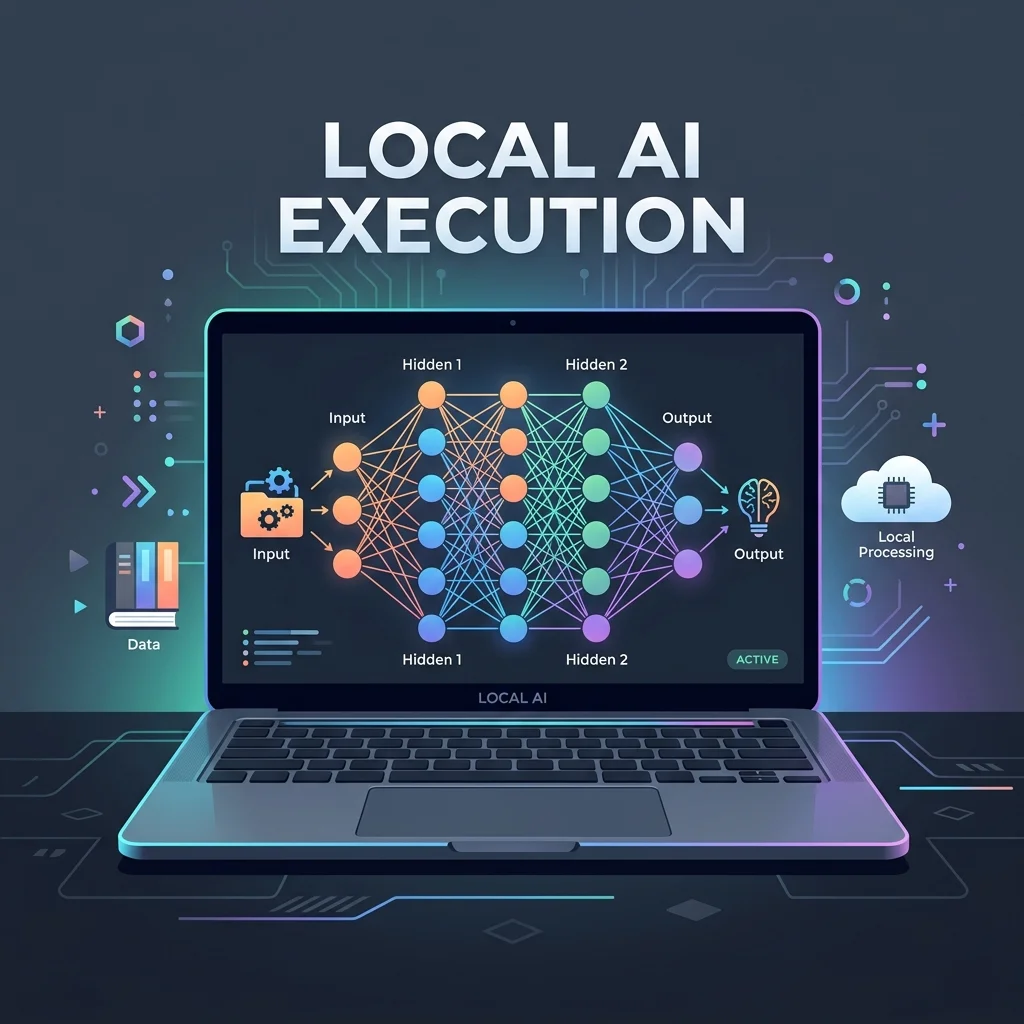
A step-by-step guide to running Qwen3.6-27B locally for coding tasks — including GGUF quantization options, hardware requirements, llama.cpp and Ollama setup, and coding workflow integration.
Published on June 15, 2026
EKI Propaganda Resistance Benchmark: Measuring AI Susceptibility to Russian Disinformation

A technical deep-dive into the Institute of the Estonian Language's benchmark for evaluating LLM resistance to Russian propaganda — methodology, model rankings, language effects, and mitigation strategies for developers deploying models in multilingual, geopolitically sensitive contexts.
Published on June 15, 2026
The State of AI Code Assistants 2026

Who's winning the AI code assistant market in 2026? GitHub Copilot, Cursor, Claude Code, OpenCode, Gemini CLI, and more — market share, segmentation, and predictions.
Published on June 10, 2026
Tree-of-Thought: Solving Problems Chain-of-Thought Can't

When linear reasoning fails on creative writing, planning, and constraint problems, branch-evaluate-prune. A Python tutorial with CoT-vs-ToT comparison on story outlines and a budget variant for cost-sensitive use.
Published on June 8, 2026
TREX — Greptile's AI Code Reviewer That Actually Runs Your Code

How Greptile's TREX execution layer uses sandboxed code execution, multi-agent orchestration, and multi-modal artifacts to catch runtime bugs that static analysis tools miss entirely.
Published on June 16, 2026
Wolfram Language & Mathematica 15 — Built-in AI Assistant and What It Means for Developers

Wolfram Language and Mathematica Version 15 ships a built-in AI Assistant in every notebook, a Wolfram Agent Tools framework for Claude Code and Codex integration, CAG (computation-augmented generation), a ModelFit superfunction, symbolic music, and major data science upgrades. Here's a developer's breakdown of what shipped and why it matters.
Published on June 16, 2026
x86 AI Compute Extensions (ACE) — What the New Spec Means for AI Inference

AMD and Intel jointly published the AI Compute Extensions (ACE) specification for x86 CPUs. Here's how ACE works, how it compares to NVIDIA PTX and ARM SVE/SME, and what it means for AI inference on commodity hardware.
Published on June 17, 2026