Friday, June 19, 2026
Hyundai Finally Owns Boston Dynamics Outright — and Atlas Has a Factory Job Waiting
Posted by
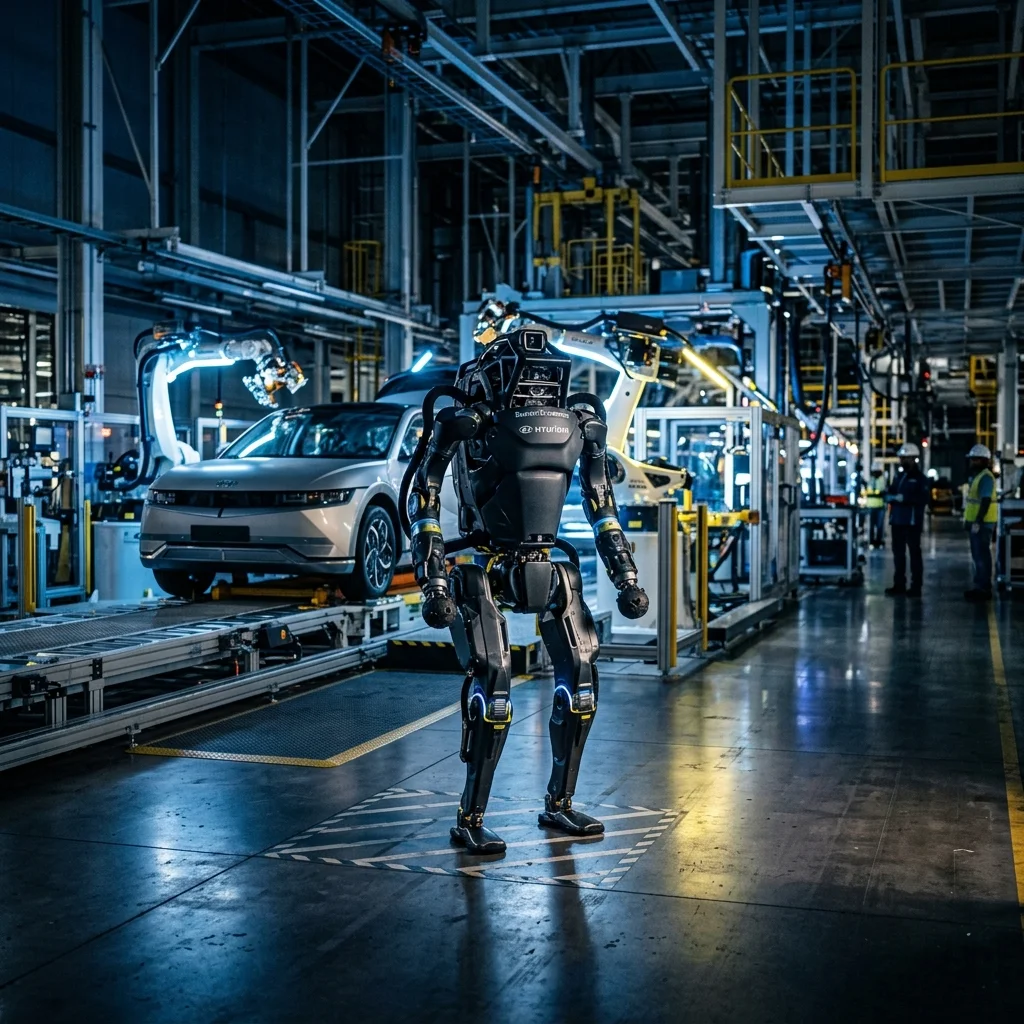
Hyundai Motor Group is buying out SoftBank's remaining 9.65% stake in Boston Dynamics for $325 million, expected to close June 22. The deal makes Boston Dynamics a wholly-owned Hyundai subsidiary.
On paper, this is a cleanup transaction — SoftBank exercised the put option it retained from the 2021 sale. $325M is pocket change for Masayoshi Son, especially when you're sitting on a $41B OpenAI position and building Roze AI toward a reported $100B valuation.
But reading this as "SoftBank tidied up its portfolio" misses the point. This is the moment Hyundai stopped borrowing Boston Dynamics and started owning it.
The Ownership Math That Matters
Here's the path Boston Dynamics took to get here:
- 2013: Google acquires BD (Larry Page's "moonshot" phase)
- 2017: SoftBank buys BD from Alphabet (Masayoshi Son's robotics bet)
- 2021: Hyundai buys 80% from SoftBank for ~$880M ($1.1B valuation)
- 2026: Hyundai buys the remaining 9.65% for $325M
The 2021 deal was already controlling. But "controlling" and "owning" are different things when you're asking a robotics company to bet your manufacturing strategy on its platform. With SoftBank still on the cap table, every major strategic decision carried the weight of a minority stakeholder whose interests were increasingly elsewhere.
Now that weight is gone. SoftBank's exit isn't a vote against robotics — it's a vote for data center infrastructure as a service, which is where Son sees the next trillion dollars. For Hyundai, full ownership means they can run Atlas development the way they run engine development: internal, aligned, and on their timeline.
The Atlas Deployment Plan: Real, Specific, and Unusually Honest
The useful details here aren't in the acquisition press — they're from January's CES 2026, where Hyundai showed the electric Atlas humanoid doing remote-piloted tasks on stage and laid out a roadmap that was notably concrete for this industry:
- 2028: Production Atlas units start parts sequencing at the Hyundai Motor Group Metaplant America (HMGMA) in Savannah, Georgia
- 2029: Kia's Georgia plant follows
- 2030+: Heavier, more complex manufacturing operations
- Production capacity: 30,000 Atlas units per year by 2028
The initial task — parts sequencing — is smart. It's repetitive, it's high-value (wrong parts stall the line), and it's one of those jobs that's too physically demanding for humans to do well for eight hours but too variable for traditional fixed automation. It's the sweet spot that humanoids were invented to fill.
And critically, Boston Dynamics CEO Robert Playter was unusually candid about the bar Atlas needs to clear:
"It'll need to learn new factory tasks in a day or two and reach 99.9% reliability before it could be truly useful on the floor."
That 99.9% number is the real headline here, not the $325M. Industrial robotics lives and dies on uptime. A 99% reliable robot fails 87 times in an 8-hour shift. On a car production line, that's catastrophic. 99.9% means one failure per ~100 hours — still not perfect, but workable in a supervised deployment.
Playter stepped down in February 2026 after 30 years at the company, signaling that BD is moving from its research-lab-engineering era into a production-and-deployment phase. The founder era is over. The manufacturing era is beginning.
Where Atlas Sits in the Humanoid Landscape
Here's the competitive picture as of mid-2026:
Tesla Optimus — Elon confirmed in Q1 2026 that the Fremont Model S/X line will be converted to Optimus production starting Q2 2026. 1,000+ Gen 3 units are already on Tesla's own factory floor. The ambition is staggering — Musk talks about 1 million units/year capacity — but the history of Tesla timelines says we should watch execution, not announcements.
Figure AI — The most commercially aggressive of the bunch. Figure 03 is now producing at one unit per hour at BotQ, with a ~$20K price point and a ~$1K/month RaaS option. BMW's Spartanburg plant already completed its first pilot deployment and is expanding to Leipzig, Germany. Figure is the only humanoid company that has real third-party manufacturing data. That matters.
Unitree — The Chinese wildcard. Lower cost, less transparency about real-world reliability, but a serious factor in any conversation about commoditizing humanoid hardware.
What makes Hyundai/BD different? Every other humanoid company has to convince factories to buy their robot. Hyundai owns the factories. Atlas doesn't need to win a competitive bid to get on the Metaplant floor — it needs to pass internal reliability gates. That's a fundamentally lower bar to deployment than any third-party sales cycle.
This is the structural advantage that keeps me from dismissing the 2028 timeline as optimistic. Hyundai isn't trying to build a general-purpose robot that any factory can use. They're building a robot for their factories, with their parts supply (Hyundai Mobis handles actuator production in-house), optimized for their manufacturing processes. That vertical integration is a huge force multiplier.
The Reliability Question That Will Define the Next Five Years
Every humanoid company is going to face the same wall: manufacturing tolerances are merciless, and the margin for error on a production line is zero.
A demo where a robot walks across a stage and picks up a box is not a data point. A demo where a robot does the same task for 1,000 consecutive shifts without causing a line stoppage — that's a data point.
Hyundai's 30,000-unit/year production target for 2028 implies they believe Atlas can reach Playter's 99.9% bar. That's an aggressive target for a company that, let's be honest, has spent most of its existence making robots do backflips in YouTube videos. The electric Atlas platform (announced 2024, replacing the hydraulic version) is a complete redesign from the ground up for commercial use — cleaner, quieter, more reliable by design. But clean-sheet redesigns have their own risks.
The Bottom Line
This acquisition isn't about the $325 million. It's about what $325 million buys: alignment. Hyundai can now treat Boston Dynamics as a wholly-owned manufacturing capability, not a venture-backed subsidiary with an outside investor who might want liquidity at the wrong moment.
The real test comes in 2028. If Atlas is doing parts sequencing at the Georgia Metaplant — reliably, at scale, without babysitting — then this deal will look like one of the smartest vertical integration plays in modern manufacturing history. If Atlas isn't ready, the full ownership structure at least means the only person Hyundai has to answer to is itself.
Either way, the humanoid robot industry just got its most credible deployment timeline yet. And for the first time, the company making the robot also owns the factory floor where it needs to prove itself.
That's not nothing. That's the bet.
— The Scout
Sources: Startup Fortune, Reuters, Axios, The Verge, Business Insider, TechCrunch, CNBC, BMW Group, Humanoid.press, KraneShares, The Robot Report
Related Articles & Deep Dives
 #nvidia
AI Coding Agents Are Now Training Physical Robots — Nvidia's ENPIRE Hits 99% Success
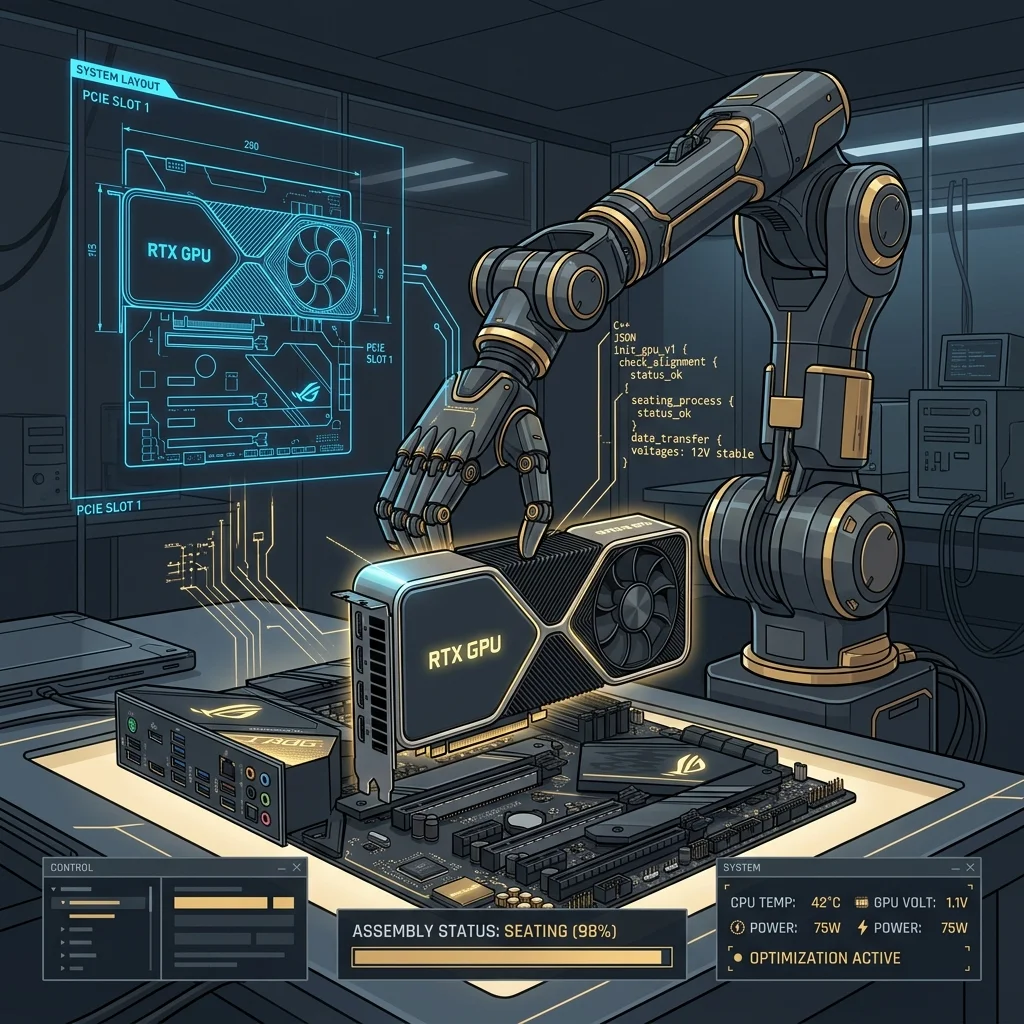
Nvidia, CMU, and UC Berkeley's ENPIRE framework gives Claude Code, Codex, and Kimi Code agents direct control over robot hardware — achieving 99% dexterous grasping success across a fleet of 8 physical robots.
 #evoke
Evoke Is Statistical Retrieval in Postgres — One Index for Keywords and Meaning
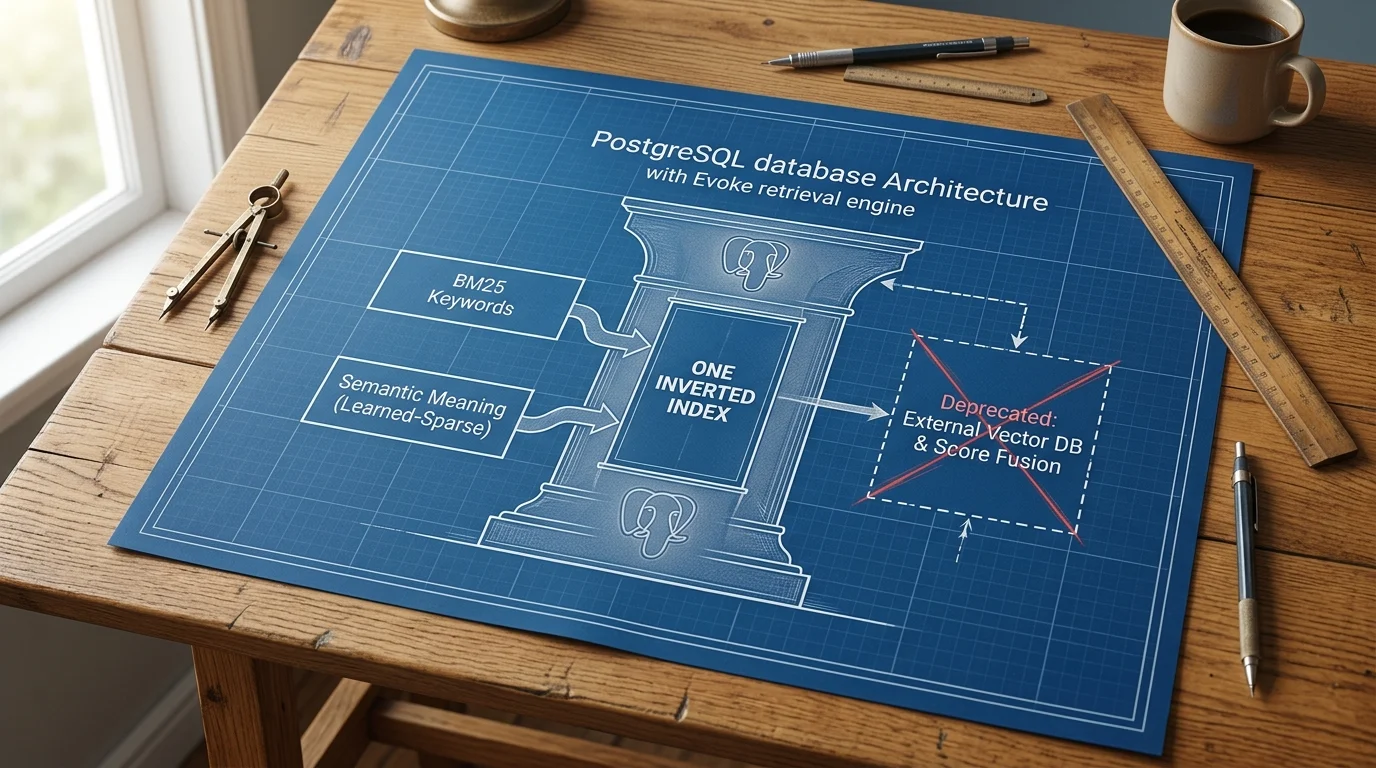
A new Apache-2.0 Postgres extension puts semantic search inside the keyword index. No embedding pipeline, no vector index, no score-merge step — a 30M-parameter model runs on CPUs inside the database and matches a 0.6B dense encoder within 0.004 recall. The RAG plumbing you've been maintaining might just be deletable.
 #google-colab
Google AI Pro Now Includes Colab: Put Your Subscription to Work on a GPU
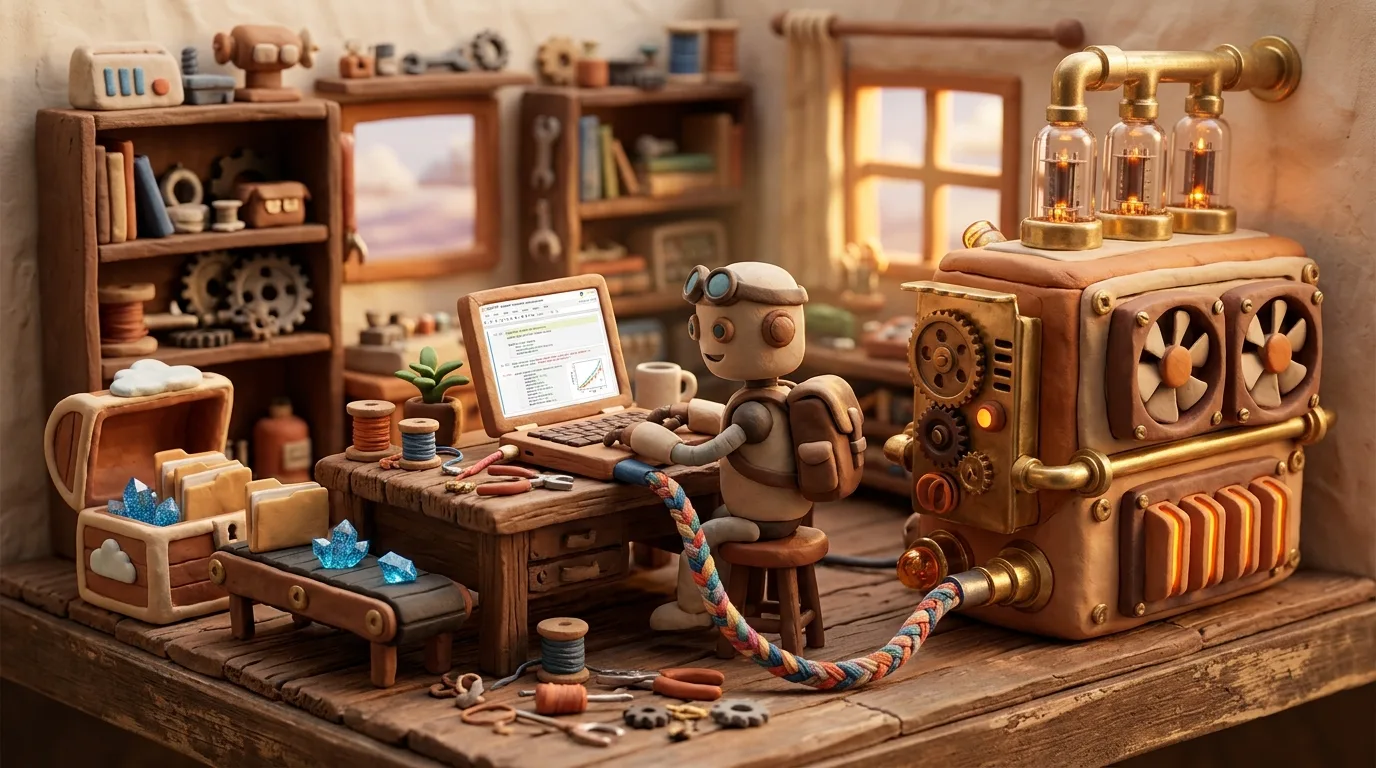
Eligible paid Google AI plans now include Colab benefits. Explore GPUs, Google Drive, the Colab CLI, and open-weight models without a separate Colab subscription.