Thursday, July 16, 2026
Kimi K3 — 2.8 Trillion Open Weights That Finally Close the Gap to Claude Fable and GPT Sol
Posted by

This is the first time a Chinese open-weight model has made me stop and recalculate my assumptions about where the frontier is.
Moonshot AI released Kimi K3 today — a 2.8 trillion parameter Mixture-of-Experts model, with open weights promised by July 27. On Artificial Analysis' agentic evaluations, it scores behind only Claude Fable 5. On the Arena.ai Frontend Code leaderboard, it's #1, above Fable 5. And it costs $3 per million input tokens — triple the price of its predecessor K2.6, but still a fraction of what the closed-source Western frontier charges.
This release isn't just another benchmark bump. It marks two simultaneous inflection points: Chinese open-weight models have genuinely closed the gap to the Western frontier, and they're no longer selling at a discount to do it.
What K3 Actually Is
The numbers first, because they matter.
K3 is a Mixture-of-Experts model with 896 total experts, of which 16 are active per forward pass. The total parameter count of 2.8T makes it the largest open-weight model ever released. Active parameters per token are estimated in the 40-100B range depending on the task — comparable to what GPT-5.6 Sol or Claude Fable 5 likely activate.
The architecture packs two novel mechanisms worth knowing about:
Kimi Delta Attention enables up to 6.3x faster decoding at the full 1M token context window. This is the kind of optimization that matters for agentic workloads — an agent running a long code review or browsing a multi-file codebase doesn't want to wait seconds per token as the context fills up.
Attention Residuals boost training efficiency by roughly 25% with less than 2% extra compute overhead. Moonshot published a paper on this, and it's the kind of architectural innovation that hints at a serious research operation, not just a lab scaling up someone else's recipe.
The context window is 1,048,576 tokens — enough for an entire codebase, a book-length document, or a long-running agent conversation without serial truncation.
Where It Lands on Benchmarks
Moonshot published internal benchmarks showing K3 trailing only Claude Fable 5 and GPT-5.6 Sol, while beating Opus 4.8, GPT-5.5, and GLM-5.2 "by a wide margin." Internal benchmarks are always suspect, so let me focus on what independent evaluators found.
Artificial Analysis Intelligence Index: K3 scores 57 — on par with Opus 4.8, behind Fable 5 and Sol.
GDPval v2 (agentic task completion): K3 hits an Elo of 1,668, up from K2.6's 1,190. That's a +478 point jump in a single generation. It outranks GLM-5.2, GPT-5.5, and Opus 4.8 on this eval, which specifically measures how well a model can complete multi-step agent tasks without human intervention.
AutomationBench-AA (SaaS workflows): K3 scores 53% — the top result on this benchmark. If you're building agents that interact with web applications (filling forms, navigating UIs, extracting data), this is the benchmark that predicts real-world performance, and K3 leads it.
AA-Briefcase (long-horizon knowledge work): Elo 1,547, a staggering +732 points over K2.6. Only Claude Fable 5 is higher.
The pattern is clear: K3's biggest gains are in agentic and long-context evaluations, not just multiple-choice knowledge tests. This is the model's design target — long-running software development with minimal oversight, vision-in-the-loop debugging, and autonomous tool use.
There's one catch that the benchmarks don't sugarcoat. K3's accuracy rate improved from 33% to 46% compared to K2.6, but its hallucination rate climbed from 39% to 51%. The model fabricates more answers even as it gets more questions right. That's the classic frontier model trade-off — capability gains come with calibration losses — and it means K3 needs guardrailing before you let it run unsupervised on production data.
The Pricing Pivot That Changes the Game
Here's the number that matters most for developers making build-vs-buy decisions:
| Model | Input (per M tokens) | Output (per M tokens) |
|---|---|---|
| Kimi K3 | $3.00 | $15.00 |
| Kimi K2.6 | $0.95 | $4.00 |
| Claude Sonnet 5 | $3.00 | $15.00 |
| Claude Fable 5 | $10.00 | $50.00 |
| GPT-5.6 Sol | $5.00 | $30.00 |
| DeepSeek V4 Pro | ~$0.20 | ~$1.00 |
K3 costs exactly the same as Claude Sonnet 5 — $3/$15 — while delivering significantly higher performance. It costs less than a third of Fable 5 and about half of GPT-5.6 Sol per token.
But compare it to its predecessor K2.6, and the picture shifts. K3 is 3x more expensive on input and 3.75x more expensive on output. The era of sub-$1 Chinese frontier model pricing is over for Moonshot.
The Decoder called this "the end of super cheap Chinese AI" and I think that framing is correct but incomplete. What's actually happening is that Chinese labs are following the same trajectory as Western labs: initial market capture at aggressive pricing, followed by price rebalancing as the models prove their capability. DeepSeek still offers V4 Pro at near-cost pricing, but for the frontier tier, the race-to-the-bottom is done.
K3 does have automatic prefix caching, which drops the effective input cost to $0.30 per million tokens for cached prefixes — significant for agent workloads that repeatedly pass the same system prompts and context across calls. Per-task cost on the AA-Briefcase eval lands at $0.94, similar to GPT-5.6 Sol ($1.04) and half of Opus 4.8 ($1.80). For the capability level, that's competitive.
The Open-Weight Promise
The weights are scheduled for release by July 27, 2026. If that holds, K3 becomes the most capable open-weight model you can self-host.
This matters for a specific class of deployment: high-volume agent infrastructure. If you're running millions of agent calls per day against a closed API, your inference cost scales linearly with success. With open weights, you can amortize the infrastructure cost across throughput and decouple your unit economics from per-token pricing.
The practical question is what hardware K3 needs at inference time. With 16 active experts per token and the Delta Attention optimization, it's possible to serve K3 on a cluster of 8×H100 nodes — expensive but not prohibitive for a startup with significant agent throughput. Moonshot claims the architecture is designed for efficient deployment, and the open-weight release will let the community validate that claim quickly.
What This Means for Developers Building Agents
Three implications worth acting on:
1. The open-weight agent tier now includes a viable frontrunner. If you've been evaluating GLM-5.2, DeepSeek V4, or Llama 4 for agentic workloads, K3 resets the comparison. It's the first open-weight model that genuinely competes with closed frontier models on multi-step tool use and long-horizon task completion. The open-weight decision is no longer about accepting a capability gap in exchange for cost savings — the gap on agentic tasks is thin enough to be a judgment call.
2. The pricing floor for frontier capability has a new anchor. Claude Sonnet 5 pricing, matched exactly by K3, looks like the market clearing price for near-frontier intelligence. Models above that tier (Fable 5, Sol) command a 2-3x premium. If you're building agent workflows, this pricing layer matters for your architecture: you can route the bulk of your traffic to a $3/$15 model and reserve the premium tier for tasks that genuinely need top-of-the-line reasoning. K3 makes that routing decision more viable.
3. The Chinese model pricing shift reduces the risk of anchoring on one provider. One reason developers have been cautious about building on Chinese API providers was the implicit assumption that pricing was unsustainably low and would eventually snap back. K3 confirms that snap-back is happening, but it lands at a predictable, market-competitive price point — not a gouge. The pricing risk in builder decisions is now symmetrical between Western and Chinese providers.
The Bottom Line
Kimi K3 is the most consequential Chinese AI model release since DeepSeek V4, and possibly since GLM-5.2 redefined what open-weight agents could do. It closes the gap to the Western frontier on exactly the dimensions that matter for production agent deployments — multi-step task completion, long-context reasoning, and tool use reliability.
The open weights (if they ship as promised on July 27) will accelerate a trend that was already underway: teams building agent infrastructure are increasingly evaluating self-hosted open models as a primary path, not a fallback.
And the pricing shift, while it ends the era of rock-bottom Chinese API costs, sets a healthier precedent for the market. Frontier capability at $3/$15 is a sustainable price point that lets builders plan long-term infrastructure without waiting for the other shoe to drop.
The question I'm watching for the rest of 2026: will DeepSeek's next move match this pricing tier, or will they stay aggressive on cost? If K3 settles as the new normal for Chinese open-weight pricing, the market just found its equilibrium.
Sources: Simon Willison — Kimi K3, The Decoder — Kimi K3 ends super-cheap Chinese AI, TechCrunch — Moonshot's Kimi 3 expected to close gap, Artificial Analysis, OpenRouter — Kimi K3
Related Articles & Deep Dives
 #claude-fable-5
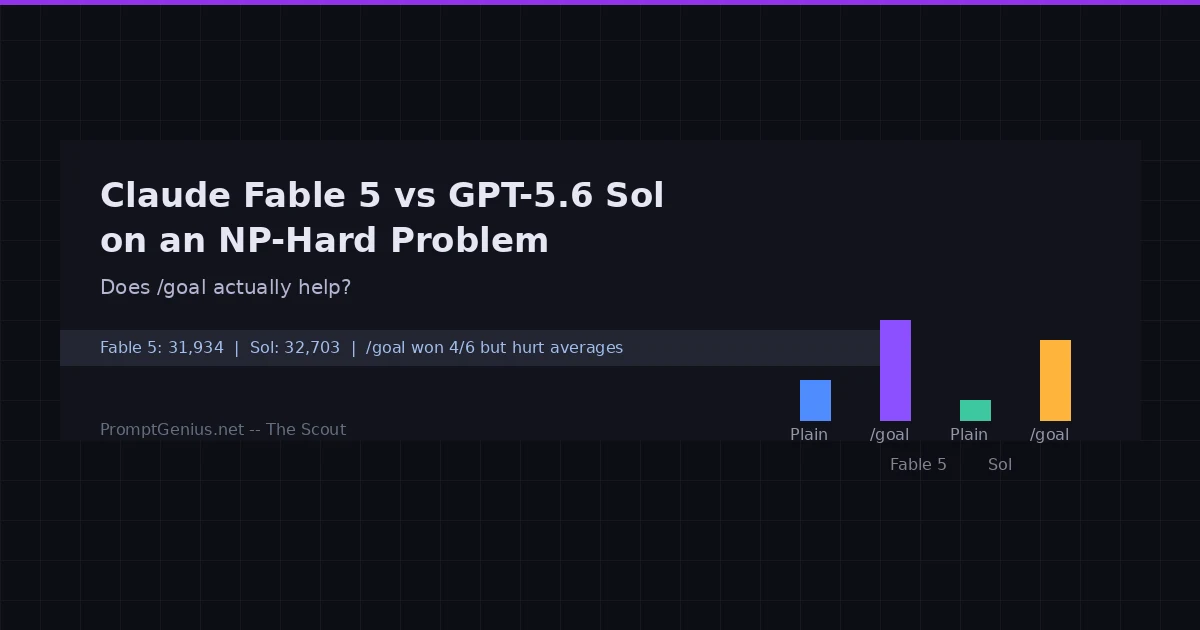
Claude Fable 5 vs GPT-5.6 Sol on an NP-Hard Problem: Does /goal Help?
Charles Azam pitted Claude Fable 5 against GPT-5.6 Sol on an unpublished NP-hard optimization problem. His findings on /goal mode — how it works, why it paradoxically hurts average performance, and what it reveals about the two ecosystems — are essential reading for anyone shipping agentic coding tools.
 #deepseek
Frontier Agent Benchmarks: DeepSeek V4 vs Qwen 3.8
DeepSeek V4 vs Qwen3.8-Max across agentic benchmarks: verified scores, vendor-reported caveats, pricing, and which model fits your workload.
 #glm-5.2
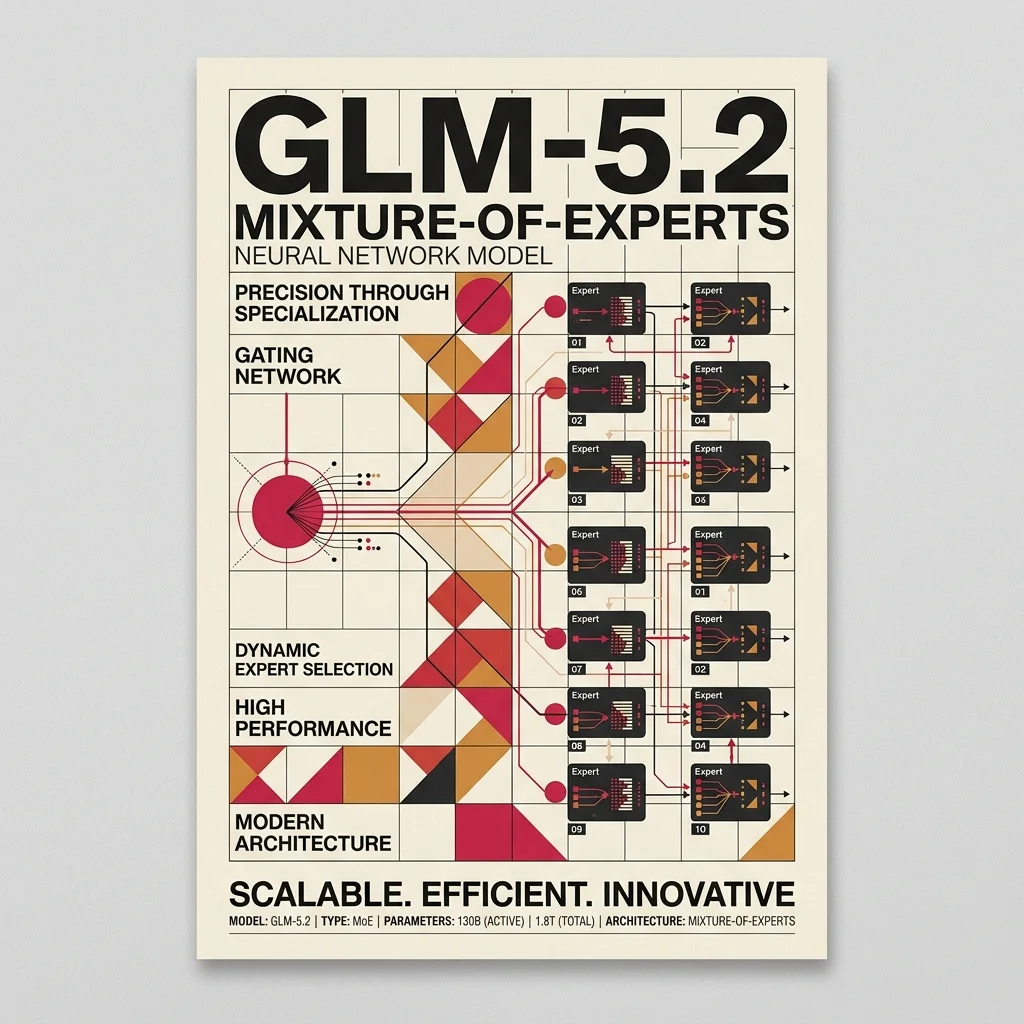
GLM-5.2 — The New Leading Open Weights Model Is Built for Long-Horizon Agentic Tasks
Z.ai's GLM-5.2 scores 51 on the Artificial Analysis Intelligence Index, making it the top open-weights model. With a 753B MoE architecture, 1M-token context, IndexShare sparse attention, and agentic RL training, here's what developers building long-horizon agents need to know.