Tuesday, August 18, 2026
Catastrophic Remembering: Why Your CLAUDE.md Keeps Growing
Posted by

Your CLAUDE.md, AGENTS.md, or copilot-instructions.md grows without bound. Instructions get added and almost never removed, until the file is a museum of stale rules that the model has to wade through. A new paper by Kushal Chakrabarti calls this catastrophic remembering — the inverse of catastrophic forgetting — and shows it's not an accident of developer habits. It's a structural consequence of how agentic prompts are maintained. And there's a fix: comments.
The Phenomenon
Researchers analyzed 247,694 instruction lifetimes across 1,867 repositories (1,801 multi-version files, 299,440 tracked version-to-version transitions) and found agentic prompts grow relentlessly:
- Prompt files more than triple over their lifetime (+226%); total size grows +140% too, so it's not just text migrating between instruction and payload classes
- They gain +4.9 net instructions per commit across 19,267 commits
- The older an instruction gets, the less likely it is to be deleted (log-hazard −0.032 per commit)
- The median file already carries 39 instructions; the 90th percentile sits at 131 — well past the range where instruction-following measurably degrades
- 64.3% of multi-version repositories grow their instruction count against only 26.6% that shrink it, with a median net gain of +7 instructions
This is the sawtooth pattern you've probably seen in your own repos: the file grows until someone rewrites it wholesale, then it grows again. The paper even quantifies the sawtooth: a mass rewrite drops the count to 59.5% of its pre-rewrite value, but it recovers to 91.5% within ten commits — and growth after a rewrite is faster (+4.9% instructions per commit vs +4.3% before).
Why It Happens: Imperfect Recall
The paper traces the root cause to the cost asymmetry of recall. When you add an instruction, you don't need to remember why — the reason is fresh. When you want to delete one safely, you have to reconstruct why it was added in the first place, and whether removing it risks a regression. With D instructions in a prompt, doing that safely costs O(2^|D|) — infeasible, because two instructions can each look free alone while both are needed together. Appending is always cheap; deleting is always expensive. So instructions accrete.
Two observations confirm the mechanism is imperfect recall, not instruction staleness or content fragility:
- The deletion hazard decays with age at −0.032 per commit — the opposite of what staleness would predict. Old instructions are the ones whose reasons have evaporated, and they're the least likely to be touched.
- More authors make it worse. Successive edits by multiple authors destroy the "why" behind each rule faster — the multi-author interaction term is significant (β −0.021) — because every undocumented handoff erases more surviving rationale.
Why It Hurts
Keeping everything isn't free. The median file carries 39 instructions, and instruction-following degrades as constraints accumulate — irrelevant context distracts the model. Files that are smaller let agents finish tasks faster and in fewer tokens. The cost is double: you're paying token and latency overhead on every run, and you're degrading the reliability of the rules that actually matter.
The Fix: Prompt Comments
The paper's headline result: comments encoding an instruction's latent reasoning halt the growth. Across 552 maintenance histories, maintainers who recorded why each instruction existed kept prompts at −5.8% excess size versus +60.4% for those who didn't — a 66-point swing at parity constraint satisfaction. In a longer-horizon simulation, comments removed 99.3% of excess instructions (+211.3% → +1.4% over 51 steps).
Because a smaller, cleaner prompt distracts the model less, real-world instruction-following improved by up to 23.1%.
The winning comment format isn't a description — it's the outcome-grounded latent reasoning: the failure behind the instruction, the hypothesis it encodes, and how that hypothesis has fared.
## Rule: Never auto-format on save
# Why: Introduced after formatter reformatted the whole codebase mid-agent-run
# and broke three tests that depended on line numbers. Hypothesis: diff noise
# confused the patch application. Still standing as of 2026-08.
Two ablations sharpen the finding:
- Comment-shaped noise is worthless. Comments with no reasoning landed within 2.7 points of no comments at all — the content drives the gain, not the annotation itself.
- An unvalidated premise is worse than no comment. A narrative of attempts without outcomes (+70.0%) was the worst arm of the entire study — worse than no comments. Handing the next maintainer a guess dressed as history is actively harmful.
One more thing worth internalizing: the comments are for the maintainer, not the model. They're stripped before the prompt reaches the model, so they cost nothing at inference time. Their entire job is to let a future you — or a future agent — decide whether a rule can safely go.
The Three-Part Comment
The paper's winning format is outcome-grounded, and it maps to three fields:
## Rule: <the instruction itself>
# Why: <the failure that motivated it>
# Hypothesis: <the causal belief the rule encodes>
# Status: <whether the hypothesis has held or failed since>
The Status field is the part almost everyone skips — and the paper shows it's the load-bearing one. A narrative of attempts without outcomes was the worst arm of the entire study (+70.0% size, worse than no comments at all). A rule whose hypothesis has since failed is exactly the instruction a maintenance audit should flag for removal — but only if the hypothesis was ever recorded in the first place.
Audit Your Prompt File
The delete mindset doesn't require waiting for a rewrite cycle. A fifteen-minute audit catches most of the damage:
- Read your prompt file as a stranger. For each rule, ask: does it still serve the repository's current state? Rules written for a deleted module are safe removals.
- Tag every rule. No comment → either recover the reasoning and add it, or treat the rule as a candidate for deletion. The cost asymmetry says you'll only ever delete the rules whose history you can reconstruct.
- Check for contradiction. Two rules that conflict with each other is a symptom of unreconstructed history — each one was added for a reason, and the reasons now fight.
- Treat agents as maintainers too. Instruction files also grow from agent feedback loops — an agent that "learns" it needs a rule after a failure appends one without recording the reasoning. The same comment discipline applies whether the editor is human or not.
What to Do Today
- Comment every rule you add. One line for the failure that caused it, one for the hypothesis, and how it's fared since. Cost: near zero. It's the
O(1)investment that prevents theO(2^|D|)problem. - Review your prompt file with a delete mindset. If a rule has no comment and no one remembers why it exists, that's exactly the risky-deletion case the paper describes — either recover the reasoning and comment it, or remove the rule.
- Treat the sawtooth as a symptom. If you're rewriting your prompt file wholesale every few months, that's the ratchet catching up with you. The comment discipline stops the growth at the source instead of resetting it.
- Keep files small. Repositories carrying a lean
CLAUDE.md/AGENTS.mdfinish agent tasks faster and in fewer tokens. Irrelevant context isn't inert — it measurably degrades instruction-following.
Catastrophic remembering is the maintenance cost of agentic prompts that no one is tracking. The fix is cheap, verifiable, and — as this paper shows — measurable. Your prompt file is code; start treating the comments like the code comments you'd never ship without. This also pairs directly with the Harness-IF findings: rules that don't change behavior are just tokens, and tokens that carry no recorded reasoning are the ones nobody will ever dare remove.
Related: the Research Agent blueprint shows a deliberately lean agent context design.
Related Articles & Deep Dives
 #copilot
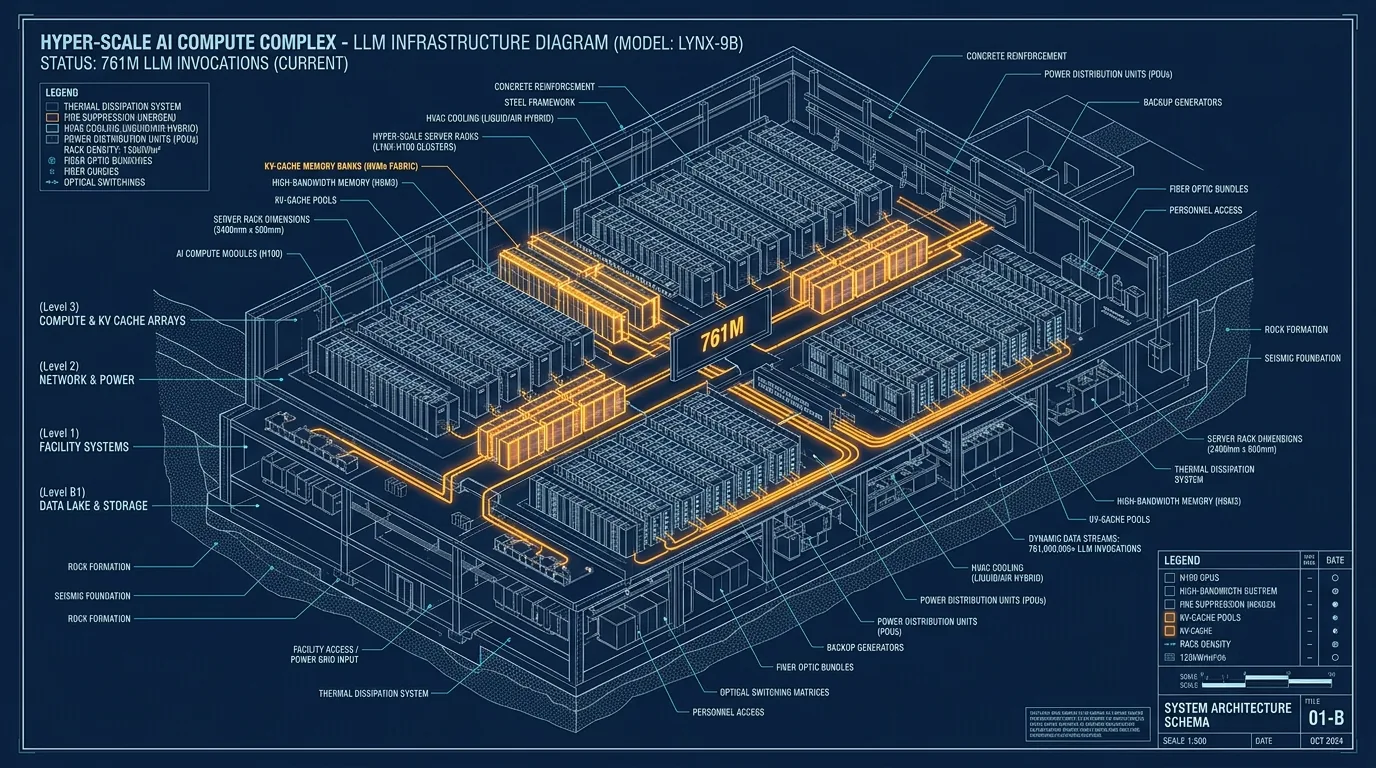
Coding Agents at Production Scale: What 761M LLM Calls Reveal
A production-scale study of Copilot's agent: 761M calls, 95T tokens. KV cache collapses across turns and after model switches; failures trigger 4x compute.
 #harness-if
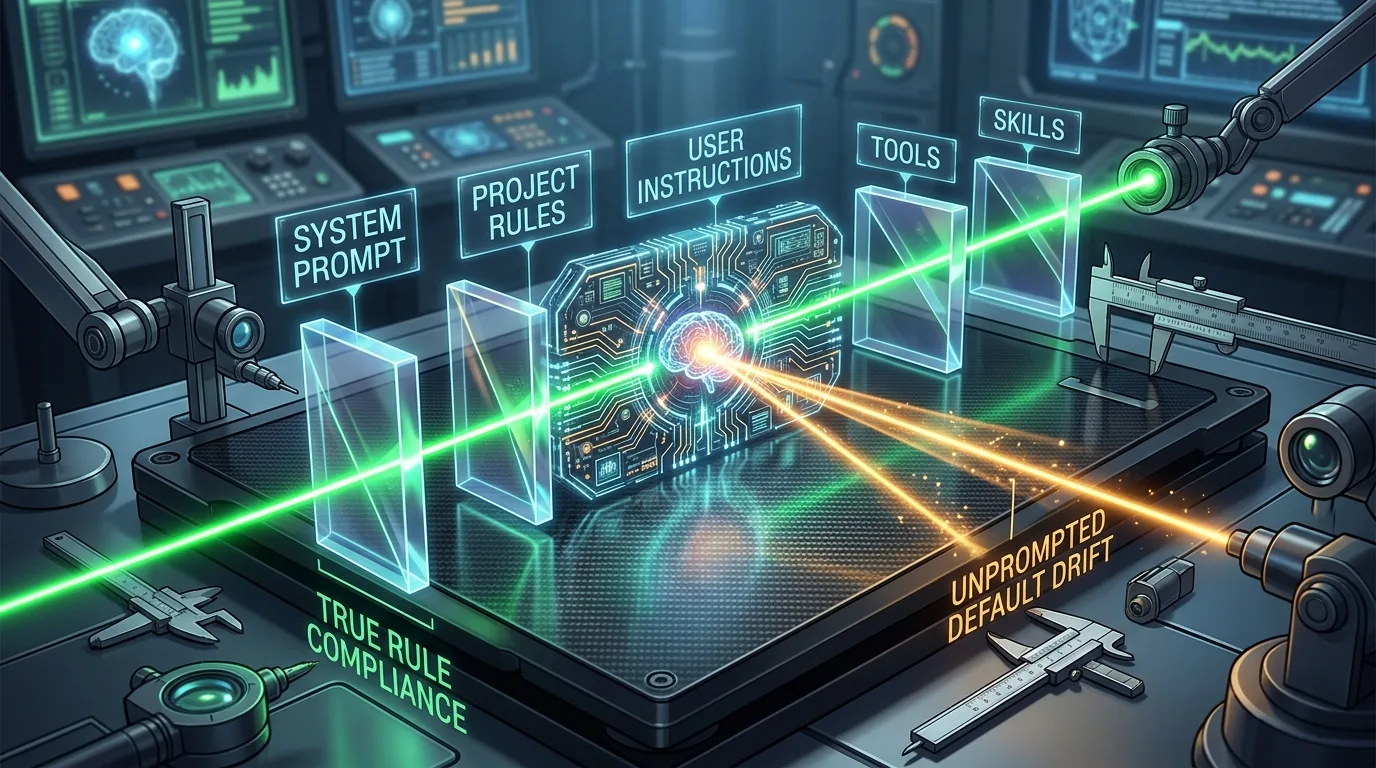
Harness-IF: Are Coding Agents Following Rules, or Just Doing What They'd Do Anyway?
A benchmark that separates compliance from coincidence: every model is worse at rules opposing its defaults — and where you put the rule changes everything.
 #swe-rpg
SWE-RPG: Coding Agents Fail at Implicit Requirements, Not Code
Agents resolve only 31.5% of real issues — and implicit requirement recovery is the biggest bottleneck (24.5–46%). The fix is asking clarifying questions.