Monday, July 13, 2026
OpenAI's New Prompting Guide: Stop Overthinking, Start With the Result
Posted by
OpenAI published a new prompting guide this week, arriving alongside the launch of ChatGPT Work and GPT-5.6. It's not the guide I expected.
After years of "act as a seasoned expert," "step-by-step reasoning," "chain-of-thought," "few-shot examples," and increasingly elaborate prompt templates, OpenAI's message to everyday users is now: stop overthinking. Just describe what you want.
This is a notable shift — and one that says a lot about where the models are, where they're going, and what prompting actually means in 2026.
The Four Building Blocks (All Optional)
The guide proposes a simple framework with four optional parts:
- Goal — What should ChatGPT do?
- Context — What information or sources will help?
- Output — What format, length, or level of detail do you need?
- Boundaries — What must stay unchanged? What should ChatGPT avoid?
The operative word is optional. None are required. The guide is explicit that a short prompt often works best. Fill in all four only for larger, complex tasks.
Compare this to the prompting advice of even a year ago, which centered on rigid formulas: role → context → task → format, with mandatory "act as a..." and detailed step-by-step instructions. The new guide doesn't mention personas at all. It doesn't prescribe chain-of-thought. It doesn't suggest providing examples.
It says: "Start in your own words, review the response, and use follow-up messages to shape the result. You don't need technical syntax or a rigid formula."
Lead With the Result, Not the Recipe
The guide's most emphatic directive: describe the outcome you want, not the process to get there.
"Start with the result, not a detailed list of steps. Include the audience or format."
The contrast with earlier prompting culture is stark. The old wisdom was to script every step — "first do X, then validate Y, then format Z." The new wisdom trusts the model to figure the path out.
There's a pragmatic exception: "Describe a process when the process itself matters." But that's the exception, not the default.
Constraints Beat Step-by-Step Scripts
Instead of exhaustive instructions, the guide recommends one or two hard boundaries:
- "Keep the approved dates and budget figures unchanged."
- "Use only the supplied sources. Flag missing information instead of guessing."
- "Prepare the message as a draft. Don't send it."
This is guardrail prompting — block the specific failure modes you care about, then let the model handle the rest. It recognizes that over-specifying steps can counter-intuitively make results worse by boxing the model into a path that doesn't account for edge cases.
Why This Shift Now
Three things are happening:
1. Models are good enough. GPT-5.6 (and its contemporaries) can infer intent from a loose description in a way earlier models couldn't. The elaborate prompting of the GPT-3.5 and GPT-4 era was a workaround for model limitations that no longer exist. If you're still writing "You are an expert AI assistant..." preambles, ask yourself whether the model actually needs that, or whether you're doing it out of habit.
2. The user base has expanded. ChatGPT Work brings agentic capabilities to business users who don't read API docs and don't want to. A procurement manager at Virgin Atlantic or a PM at RingCentral (both early testers of ChatGPT Work) shouldn't need to learn "prompt engineering frameworks" to get value. The guide reflects that reality.
3. The incentive is shifting. OpenAI makes money when users succeed with the product, not when they write elegant prompts. If the product works best when you just say what you want, the docs should say that.
The Developer Tension
Here's where it gets interesting for this audience.
This guide is for users — Chat, ChatGPT Work, and Codex. It's about natural language interaction in a product context. It is not the same as prompting for API calls, system prompts for agents, or structured tool definitions for MCP servers. Those domains still benefit from precision, structure, and the kinds of patterns we cover regularly on this site.
But the tension is real. If the model is good enough that "describe the result" works for most use cases, then the more elaborate patterns we use in agent development — the chain-of-thought scaffolding, the multi-shot examples, the explicit step-by-step plans — are they making things better, or are they compensating for something that no longer needs compensating for?
The honest answer is: it depends on your use case. A tool-calling agent with 15 MCP servers needs more structure than a one-off summarization task. A critical production pipeline needs more guardrails than a quick draft. But the principle holds: start simple, add structure only where you have evidence that it helps.
If you're not testing whether your elaborate system prompt is actually improving outcomes over "do this thing and return the result," you might be over-engineering.
What This Means for Prompts on PromptGenius
The frameworks and patterns we document here — MCP server definitions, agent system prompts, tool descriptions — remain essential for structured, multi-step agent workflows. That's not going away.
What this guide signals is that the default should be simpler. When you're writing a prompt, start with the minimum viable instruction. Test it. Add structure only when the output demonstrably improves. The most elaborate prompt is not the best one — the best one is the simplest one that gets the job done.
I suspect we'll see more platform companies — not just OpenAI — push toward simpler prompting guidance in the coming months. It's a sign of maturation. We're moving from "how do I trick this brittle AI into understanding me?" to "how do I clearly describe what I want to a system that mostly gets it?"
That's progress.
The full guide is at learn.chatgpt.com/docs/prompting. The Decoder article by Jonathan Kemper has a good summary of the key points.
Related Articles & Deep Dives
 #gpt-6
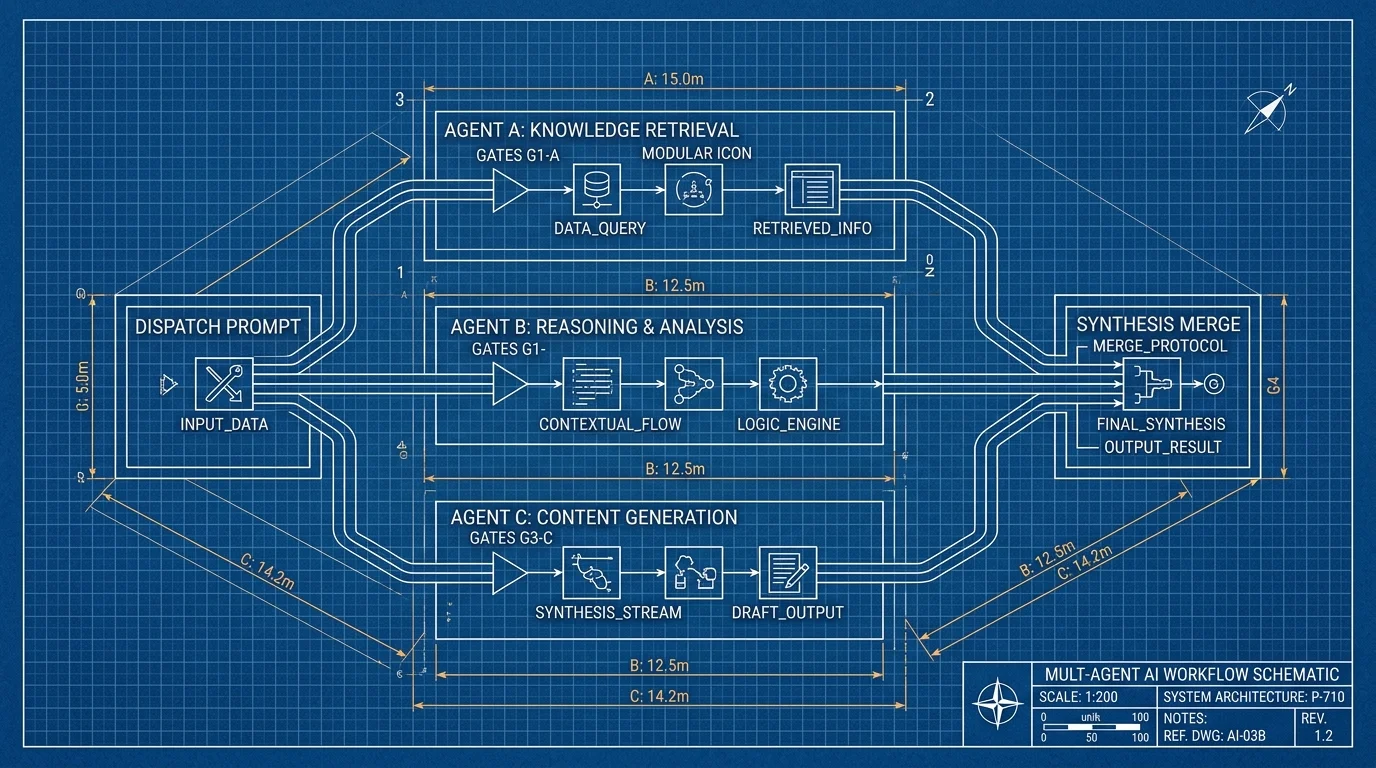
How to Prompt GPT-6 Astra Pro's Parallel Agents in ChatGPT
GPT-6 Astra Pro now splits one task across parallel agents. How to brief agents, set stop conditions, and merge results — with a copy-paste template.
 #claude
Claude Opus 5 Wants Simpler Prompts — Delete Your Skills and Just Say What You Want
The most viral Claude advice of the week: Opus 5 performs worse when loaded with skills, MCPs, and step-by-step instructions. Here's what the 'simplified prompts' shift means and how to actually prompt Opus 5.
 #openai
Codex Just Made Your Agents Opaque — And That's the Real Story
OpenAI's Codex CLI now encrypts instructions between parent and sub-agents. Developers can't see what their agents are delegating. Here's what changed, why it matters, and what it says about the future of agent transparency.