Tuesday, November 24, 2026
Is Venice AI Private? What Its Privacy Modes Actually Mean
Posted by
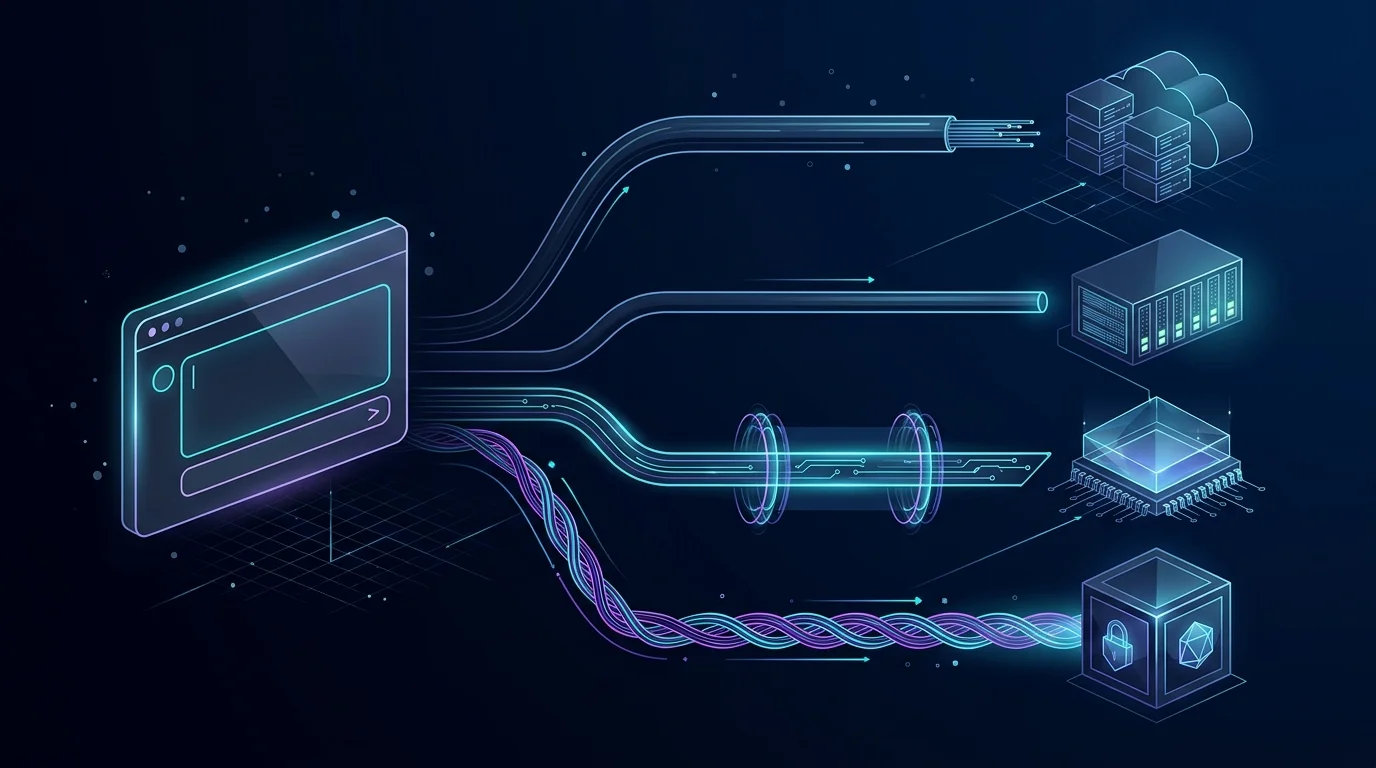
Venice AI offers four privacy modes, but they answer different questions: who sees your prompt, who promises not to keep it, and whether encryption keeps it out of Venice's hands. A model supporting encryption is not the same as a request actually using it.
This is a reading of Venice's privacy page, legal privacy policy, app FAQ and developer documentation, checked on 24 November 2026. No account was created, no attestation run, no E2EE session tested, and no authenticated API called. These are attributed claims, not hands-on verification.
The four modes
The following summarizes Venice's descriptions of prompt and response content, not metadata or every product feature.
| Mode | Who processes the prompt | Protection and trust boundary | App tier on Venice's privacy page |
|---|---|---|---|
| Anonymous (Anonymized in the API) | Third-party frontier provider | Venice identity obscured; provider still sees the text | Free |
| Private | Venice-controlled GPUs or zero-retention partner infrastructure (definition varies; see below) | Contractual no-retention commitment, not protection against reading during inference | Free (default) |
| TEE | Enclave operated by NEAR AI Cloud or Phala Network | Hardware isolation from the GPU host; Venice still receives plaintext over TLS | Pro |
| E2EE | Verified enclave after client-side encryption | Venice relays ciphertext when the client implements and verifies the encrypted flow | Pro; text models only |
Venice labels Private as its default on the privacy page. That is a product description, not a conclusion about how many models use it. Anonymous obscures your Venice identity, not identifying details you put in the prompt.
Those are app tiers, not API tiers. API access is billed separately and pay-per-use at the published model rates, with an API key or an x402 wallet; a Pro subscription does not include API usage. The docs do not state whether a free or non-Pro API account can call an e2ee-* model: the public /models response carries no populated plan field, and the E2EE model pages list no Pro restriction. Treat the app's Pro gate as an app gate until Venice documents the API rule.
According to the TEE/E2EE guide, TEE-only requests reach Venice in plaintext over TLS before enclave processing. Hardware isolation protects inference from the host operator under the enclave's security assumptions; it does not remove Venice from that request's trust path. TEE and E2EE are currently available on text models only.
E2EE requires a client, not just a flag
The API privacy overview describes supportsTeeAttestation and supportsE2EE as capabilities. They do not activate protection. TEE and E2EE can use the same e2ee-* model ID; the request flow determines whether client-side encryption is used. The /models response can even report an E2EE-capable model's baseline privacy as private, so the privacy field alone is not enough.
For actual E2EE, the client must:
- Generate a fresh, random 32-byte nonce for each attestation request and verify that the returned nonce matches it. Parse the Intel TDX quote client-side, check its measurements against the expected values, reject debug enclaves, and verify that the signing key is bound to the enclave's
REPORTDATAbefore trusting the model key. For plain TEE,signing_keymay be absent. - Encrypt
userandsystemmessages locally with the documented ECDH (secp256k1), HKDF-SHA256 and AES-256-GCM flow, then send the requiredX-Venice-TEE-*headers. - Verify response signatures through
/tee/signaturewhere the model provides them, and decrypt the returned content; streaming is recommended.
Selecting an E2EE-capable model or seeing tee: true / e2ee: true in a capability summary only tells you what the model supports. A plaintext request to an e2ee-* model without the E2EE headers runs in TEE-only mode. With correct verification and trustworthy client software and enclave hardware and software, Venice relays the encrypted request fields and response content as ciphertext. Venice's example passes message roles other than user and system through unchanged. If a client resends a decrypted assistant reply in a later request using that example, the reply goes to Venice in plaintext. Venice E2EE guide
There are trade-offs: E2EE disables web search, memory and summaries; the guide excludes file uploads, disables Venice's default system prompt (it must be encrypted client-side if used), and warns that tool definitions are not encrypted. Function calling depends on the model. Don't assume every feature or tool payload shares the message-content protection.
What can still be stored
Venice's API overview says it does not store or log prompt/response content for normal inference. Its privacy page says conversation history stays on your device by default. Neither means there are no records: the docs list account or wallet identifiers, API key identifiers, timestamps, model choices, token counts, billing, request IDs, rate-limit state, IP/device information and product events as operational metadata.
Encrypted backups and share links
"Local by default" is not "local only". Two opt-in features put an encrypted copy on Venice's infrastructure:
- Encrypted backups (Pro, web app only). Venice encrypts the history on your device with a password only you control, splits it into chunks and uploads them. You can restore or merge the backup on another logged-in web device. Venice says it keeps no record of the password; you can keep five concurrent backups and each expires after 90 days.
- Share links. The conversation is encrypted in the browser and stored on Venice's servers; Venice's privacy post says 14 days, while the FAQ says only "a limited time." The decryption key is only in the URL, so Venice says it cannot read the content; anyone with the link can read the conversation up to the point it was shared and continue from there in their own browser. Sharing is text-only.
Venice says neither path gives it the plaintext, but both qualify the local-only claim.
The legal policy also documents exceptions:
- Venice's legal policy says it temporarily stores generated videos until download because of file size. Automatic deletion defaults to off on
/video/retrieve. API clients can enable deletion on retrieval or call/video/completeafter download. The API also documents cleanup for generated audio, including music, and converted voice. Audio cleanup · Voice conversion cleanup - Consented likeness uploads involve processing and short-term image/video storage by BytePlus Pte. Ltd. The policy says temporary upload storage is deleted within one hour and BytePlus is instructed to delete the media immediately after generation. Hashes, timestamps, consent records and internal asset identifiers linked to the account remain for compliance/audit purposes.
There is an unresolved discrepancy between Venice's sources. The legal policy broadly says model providers may not store, retain or use prompts/outputs beyond processing and returning a response. The marketing privacy page says Anonymous users should assume the provider stores their content. Those statements are not equivalent. Without clarification, don't treat Anonymous as a verified zero-retention route.
What the Private label does not establish
A model name does not establish where it runs. Venice lists Grok 4.7 under Private, but its own definitions of Private do not agree: the privacy page says Venice-controlled GPUs or zero-retention partner infrastructure, the catalogue methodology says infrastructure Venice controls, and the documentation index describes self-hosted open-source models. Grok 4.7's page names xAI as the provider and lists no open-weights link, unlike Venice's GLM 5.3 E2EE page. That still does not establish where Grok 4.7 runs. The supported claim is only that Venice labels it Private; the exact hosting route remains unresolved.
Prompt caching
Venice also documents prompt caching: processed input prefixes are stored for reuse, typically for 5–10 minutes although provider lifetimes vary, and cache rates appear for both Private and E2EE models. Venice does not say whether caching is disabled for Private, TEE or E2EE, or whether an E2EE cache stays inside the enclave. The docs do not reconcile that cache with the zero-retention wording, so don't read "no prompt or response is stored" as covering every derived cache entry.
Dot, briefly
Dot publishes a privacy disclosure page. It describes self-hosted models, protected frontier routes, browser-local regular chat history and optional encrypted sync. Its SmartPrivacy feature replaces detected identifiers in supported chats, with privacy receipts showing the transformation—not guaranteed removal of every identifying detail.
That page is a product/marketing disclosure, not an identified legal privacy policy. Dot also publishes a technical whitepaper, but it is explicitly a target-state specification (v0.3), not production evidence; it describes a no-retention invariant and proposes canary tests. A check of usedot.xyz/privacy and common legal paths returned 404, so this review still did not establish Dot's legal policy or independently test its redaction, sync or inference routes.
The short version
Anonymous exposes prompt text to the provider. Private relies on retention commitments, and the treatment of prompt caches remains unclear. TEE isolates inference while Venice can still read the request. Verified client-side E2EE protects the encrypted request fields and response content from the Venice proxy. Metadata, feature limitations, backups, share links and policy exceptions still matter.
For a local alternative, the Bonsai 27B write-up covers phone inference; MosaicLeaks explains why query patterns can leak information too. For coding-agent setup, see the OpenCode guide—then check the client's actual encryption and verification flow rather than assuming compatibility implies E2EE.
Related Articles & Deep Dives
 #ai-agents
MosaicLeaks — When Your Research Agent Can't Keep a Secret
ServiceNow Research's MosaicLeaks benchmark reveals a hard truth: every web query your agent makes could leak private information. Here's how the mosaic effect works, why RL makes it worse before it gets better, and what PA-DR does about it.
 #openrouter
Grok vs Claude vs GPT: What OpenRouter's Agent Battle Royale Reveals About Model Choice for Autonomous Agents
OpenRouter dropped 11 LLMs into a 30-game battle royale. Grok 4.1 Fast won 43% at $0.97 per win. Claude Sonnet 4.6 won 17% at $26.78. Three models won zero games. The results challenge how we think about model selection for agentic workloads.
 #gemini
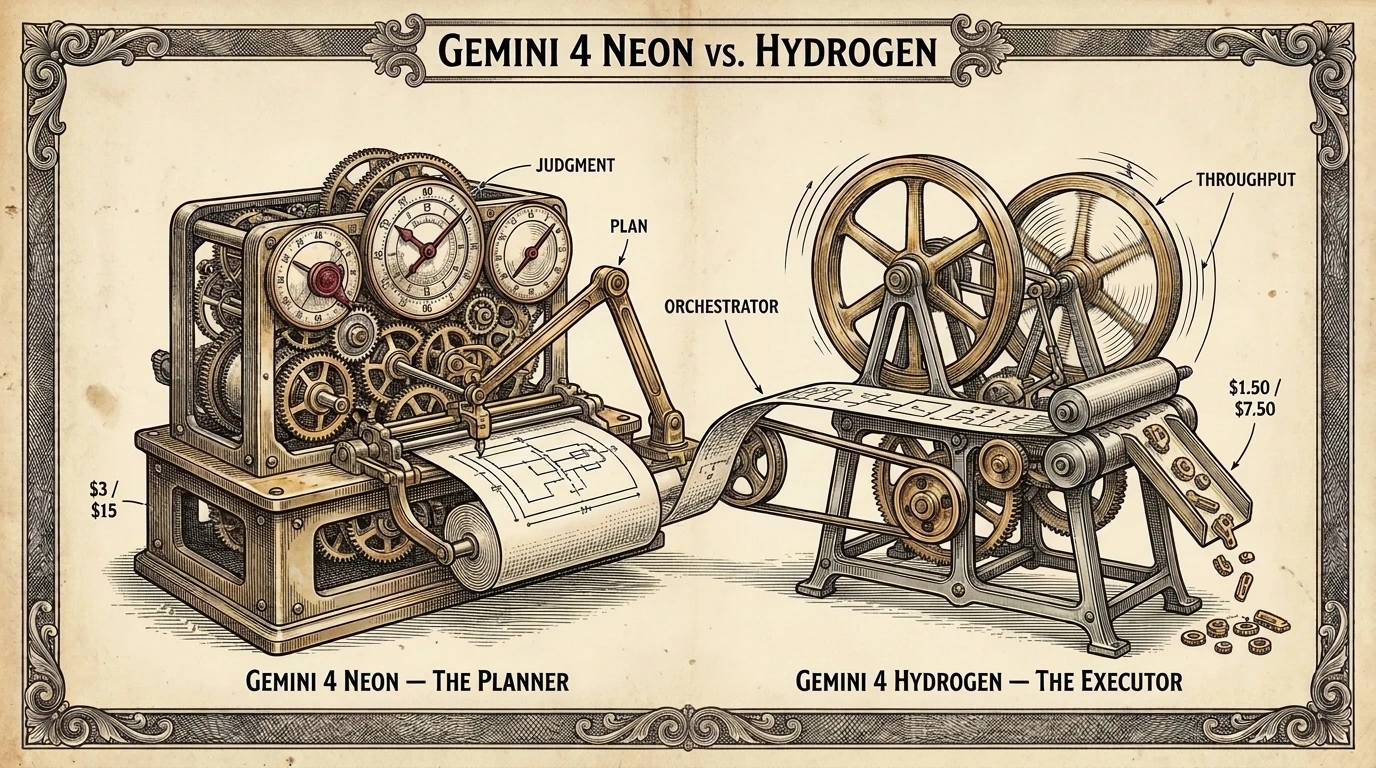
Gemini 4 Neon vs Hydrogen: Which Tier, What It Costs
Neon costs twice Hydrogen per token and scores 9 points higher at default effort. Specs, both price sheets, and how Antigravity's Orchestrator pairs them.