Sunday, October 18, 2026
Kling 4.0 vs Seedance 2.5: Video Prompts for the New Defaults
Posted by
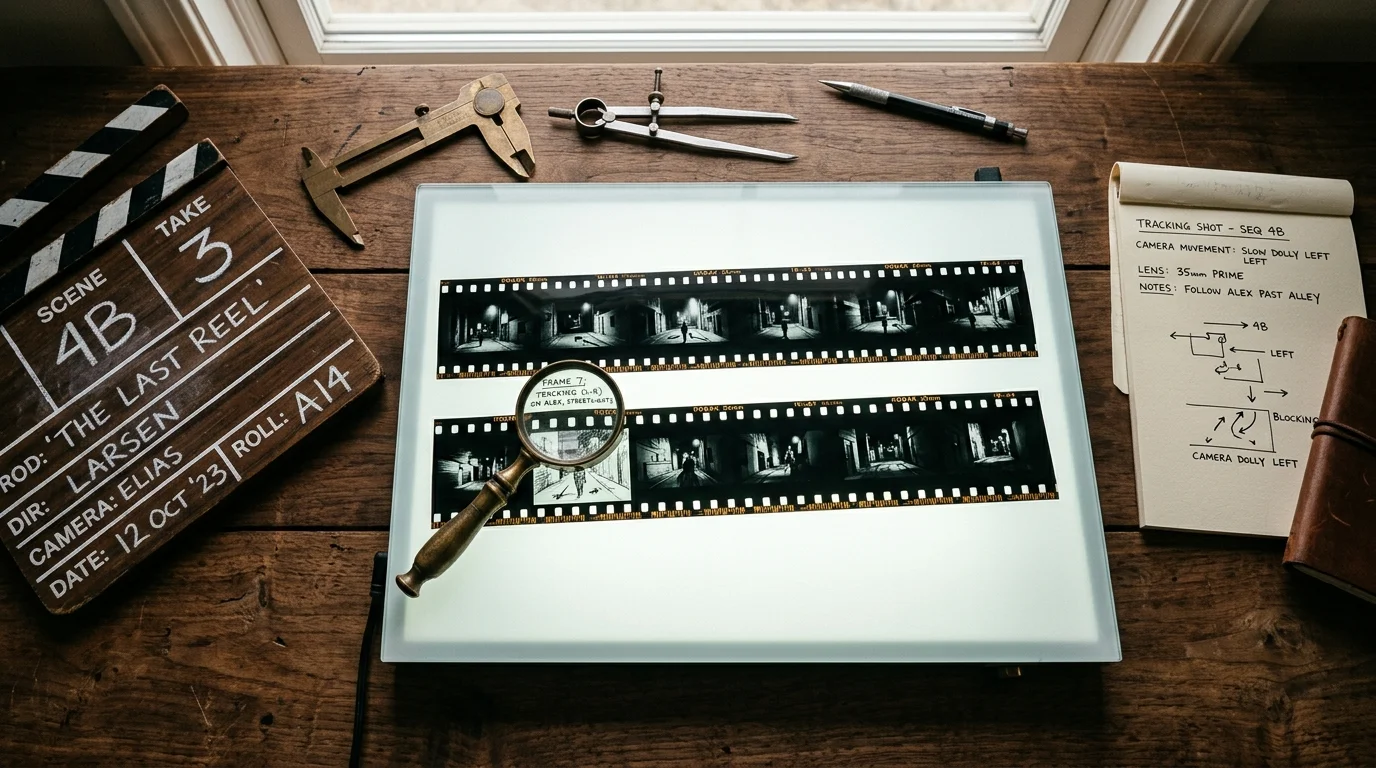
The two most capable consumer video models now share the same headline spec — 30-second generation in a single pass, Seedance 2.5 since July 31 and Kling 4.0 since October 15 — and Google told Veo 3.1 preview users their endpoint stops on October 22. If you build with text-to-video, your prompt library needs re-benchmarking against new defaults, and the fastest way to do that is the same-prompt method: identical text, identical references, two models, one comparison table. That is exactly the format Bobby Jocson used on X on October 15 — "Seedance 2.5 vs Kling 4.0. Same exact prompt." — and it is the method this post turns into five reusable test prompts.
What shipped, and when
Kling 4.0 went global on October 15. Kuaishou's press release dates the launch to October 15, 2026, with three stated priorities: realism, control, and professional quality. The specs that matter for prompting: native generation of up to 30 seconds in a single pass, and Omni Reference accepting up to 15 reference assets and up to 10 keyframe inputs. The rollout was staged — Kling's own blog says Kling 4.0 Flash reached Ultra Yearly subscribers on September 28, with the full model entering early access and a wider rollout in October. Kling 4.0 also integrated with Kling MCP and CLI, so agents can call it; a developer API is listed as coming soon.
Seedance 2.5 has been out longer. ByteDance's Seed team launched it on July 31, 2026, built on a unified audio-video joint-generation architecture. Like Kling 4.0 it generates up to 30 seconds in one pass and supports multiple rounds of extension. Its reference system is larger: up to 30 images, 10 video clips, and 10 audio clips per pass, plus timestamp-level editing and features aimed at film and advertising work (green screen, camera perspective, reference-based editing). At launch it ran on Jimeng AI and Doubao Pro; Dreamina's August 3 press release added global access on Dreamina, with promotional pricing starting from $0.097 per second.
Midjourney is the odd one out. Its current V8.2 model — default since July 24, 2026 — is an image model. Video remains the V1 video model: you animate an image as a first frame into a 5-second clip, extend it up to four times (about 4 seconds each) to a maximum of 21 seconds, and control motion with --motion low or --motion high. For short loops and image-first clips it is still a workflow worth running — the third comparison row below.
And the Gemini side of the pipeline changed too. Google's release notes show gemini-omni-1.1-flash went generally available on August 27, 2026, with video extension, first-plus-last-frame interpolation, and a resolution parameter spanning 360p through 4K (1080p and 4K outputs are generated using upscaling). It is also the designated replacement for the three Veo 3.1 preview endpoints. A taste of what creators are doing with it: Zidan 子丹's October 12 post combines "Image: Midjourney + ChatGPT + Gemini / Video: Gemini Omni" in a single pipeline.
The comparison table
| Kling 4.0 | Seedance 2.5 | Midjourney video | |
|---|---|---|---|
| Max single pass | 30 s | 30 s, extendable in multiple rounds | 5 s, extendable 4x to 21 s |
| Resolution | Not stated in Kuaishou's release | Not stated in the Seed blog or Dreamina release | 480p SD; 720p HD on Standard/Pro/Mega plans, Fast Mode |
| References | Up to 15 assets + 10 keyframes | Up to 30 images, 10 videos, 10 audios | 1 image as first frame, optional end frame |
| Access | kling.ai, apps, MCP, CLI; API coming soon | Jimeng/Doubao Pro (China), Dreamina (global); ModelArk API coming soon | All plans in Fast Mode |
| Price signal | Per-credit; no official rate card published | From $0.097/s promotional on Dreamina | GPU time: 8 GPU-min (SD) or 26 GPU-min (HD) per batch-4 job |
Every cell traces to the sources linked above — Kling's numbers to the Kuaishou release, Seedance's to the Seed blog and Dreamina release, Midjourney's to the video docs.
Five test prompts to run yourself
These are templates, not verdicts — no vendor publishes head-to-head quality data, so run each prompt identically on both models and judge the outputs against your own brief. The structure below works because it names the four things the vendors emphasize: motion stability, reference handling, camera control, and continuity.
1. Motion stress test (Kling's stated priority is steadier large-scale motion):
A courier sprints down a rain-slicked market alley at dusk, weaving between
stalls. High-speed action, complex camera tracking alongside at eye level.
Fabric and water spray react to each turn. Handheld energy, no cuts.
Run at each model's maximum single-pass length — 30 seconds on Kling 4.0 and Seedance 2.5, 5 seconds on Midjourney — and watch for drift in the background stalls, which is where long takes usually fail.
2. Character consistency with references (the reference-count test: 15 assets + 10 keyframes on Kling, 30 images on Seedance):
The same bartender character from [reference image 1] wipes a glass behind
the counter of [reference image 2]. Keep her uniform, hairstyle, and the
bar layout exactly consistent. She looks up, smiles, and returns to work.
Feed the identical reference set to both models. Seedance accepts image, video, and audio references in one pass; Kling's Omni Reference combines up to 15 assets with up to 10 keyframes.
3. Camera move (Seedance calls out camera-perspective editing):
Slow dolly-in from the doorway to the desk across one continuous take.
The camera never cuts, never shakes. Subject stays centered in frame as
the room's depth compresses.
4. Text in scene (a capability neither vendor documents — which is the point of testing it):
A neon shop sign reading "OPEN ALL NIGHT" flickers above a ramen stall.
The sign text stays legible and correctly spelled through the whole shot
as the camera passes beneath it.
5. Multi-shot continuity (Seedance's one-take framing against Kling's single-pass 30 seconds):
One continuous take: she locks the cafe door, crosses the street in the
rain, and steps into a taxi. Lighting shifts from warm interior to cool
street to dashboard glow. Same coat, same haircut, no cuts.
Then extend: Seedance supports multiple rounds of extension; Midjourney caps at 21 seconds.
For production workflows that consume clips like these, our Colab image-to-video lab shows how to wire generation into a notebook loop, and the anime story pipeline covers multi-shot consistency end to end.
Veo 3.1 preview users: the October 22 box
If your code calls veo-3.1-generate-preview, veo-3.1-fast-generate-preview, or veo-3.1-lite-generate-preview on the Gemini API, Google's deprecations page lists their shutdown date as October 22, 2026, with gemini-omni-1.1-flash as the recommended replacement. Three things to know before you swap the model string. First, the migration is not a rename: the replacement is a different model, so re-test your prompts rather than swapping the string. Second, resolution handling differs — the changelog specifies that 1080p and 4K outputs are generated using upscaling. Third, Google states these shutdown dates are the earliest possible dates; the exact date is communicated to users with advance notice. Plan for the floor, not the maybe.
Caveats before you commit a pipeline
- Kling's per-credit price is not officially published. Neither Kuaishou's release nor Kling's blog lists a rate. Check the cost in the creator before budgeting.
- Not everything advertised is live. Kling's own blog marks its 10-bit HDR output and 2-minute extension as coming soon; Midjourney's HD video is plan-gated to Fast Mode.
- The five prompts above are a benchmark harness, not benchmark results. The same-prompt posts circulating on X are single examples with "Made with AI" labels — use them as inspiration for the method, then generate your own evidence on your own briefs.
- API access is asymmetric. Kling and Seedance both list developer APIs as coming soon, so today's programmatic options are narrower than today's app options.
The pattern underneath all of this: two competing models now generate 30 seconds in a single pass — Seedance doubled from 15 — which moves the practical skill from stitching short clips toward directing long takes — prompt-level shot design, reference discipline, and continuity language. For where video generation sits in a broader channel workflow, see our faceless YouTube pipeline, and to have an LLM review the clips you generate, see claude-real-video, an open-source tool that lets any LLM watch video.
Related Articles & Deep Dives
 #ai-agents
AI Agent Frameworks Compared: LangChain, CrewAI, AutoGen — What's Worth Using in 2026
A practical comparison of LangChain, CrewAI, AutoGen, and smaller agent frameworks. What each does well, what it doesn't, and when to skip the framework entirely.
 #claude-code
Claude Code vs Gemini CLI vs OpenCode: Which AI Coding Agent Is Right for You?
Head-to-head comparison of the three leading terminal AI coding agents. Pricing, models, context windows, privacy, and when to pick each tool.
 #anthropic
Anthropic Anti-Distillation Defenses and Agent-Scale Source Control
Anthropic cut distiller harvests by 90-99% and rebuilt source control for agent scale. What both mean for anyone building on Claude's API today.