Sunday, October 18, 2026
Open-Weights Frontier: Muse Spark Open and Beam on Your Hardware
Posted by
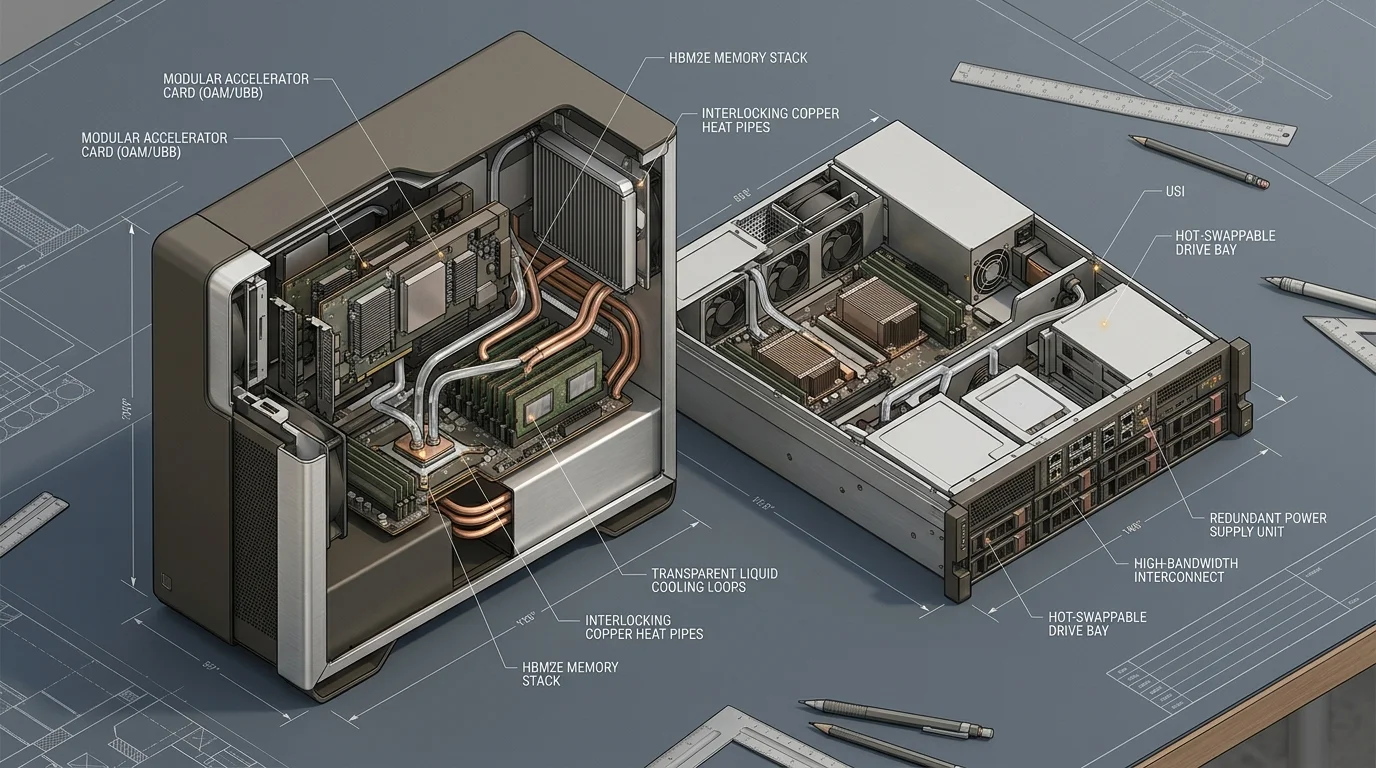
Within 48 hours this week, two US labs published frontier-scale weights — and their release pages read like two different answers to the same question: who is allowed to run this, and on what? Meta put out Muse Spark Open on October 15, billing it "the most capable US open-weight model to date." Reflection released Beam on October 16 under Apache 2.0. Both are mixture-of-experts models with million-token contexts. The interesting differences are not the benchmark tables — they're the hardware lists and the license text.
What Actually Shipped
Muse Spark Open is the open-weight release of Muse Spark: 816B total parameters, 42B active per token, natively multimodal (text, image, audio, and video in; text out), with a 1,048,576-token context window. Meta's announcement is explicit that this is a desktop story too: "the first model in its class to run on your desktop using two Apple M5 Ultra Mac Studios with the latest MLX framework." The build guide specifies the rig — two Mac Studios with M5 Ultra and 512GB of unified memory each, or four with 256GB each, connected over Thunderbolt 5 with RDMA.
Beam is Reflection's first open-weight model: 501.3B total, 23.4B active, 52 layers (3 dense + 49 MoE), 1M context, text-only, knowledge cutoff June 30, 2026. It was pretrained on 23.8 trillion tokens and post-trained with large-scale asynchronous RL; Reflection positions it as competitive with GLM 5.2 and approaching Qwen 3.8-Max on coding and agentic tasks — a claim we report, not verify.
The Table: What Runs Where
| Muse Spark Open | Beam 1.0 | |
|---|---|---|
| Total / active params | 816B / 42B | 501.3B / 23.4B |
| Modalities | Text, image, audio, video in; text out | Text only |
| Context window | 1,048,576 | 1M |
| BF16 weights | ~1.65 TB | ~1 TB |
| Smallest checkpoint | NVFP4, ~537 GB | NVFP4, ~280 GB |
| NVFP4 hardware | 4-GPU Blackwell node (≥700GB VRAM) | Blackwell GPUs (H200 and older can't) |
| BF16 hardware | 8 GPUs, e.g., 8 × B300 (~2 TB VRAM budget) | 16 × H200 across two nodes (78 GB weights each) |
| Apple silicon path | 2 × M5 Ultra Mac Studio (512GB each) via MLX | No official path; community GGUF quants via Unsloth |
| Runtimes | SGLang, vLLM, TensorRT-LLM, llama.cpp | vLLM, SGLang, transformers (day-0) |
| License | Muse Model License (limited commercial terms) | Apache 2.0 |
Sources: Meta's model card, checkpoint docs, and research post; Beam's model card and the Hugging Face launch post.
Read the NVFP4 row twice. The 4-bit checkpoints are the practical entry point for both models, and both are Blackwell-native — Muse Spark Open's docs put the NVFP4 checkpoint on a single 4-GPU Blackwell node at ~537 GB, while HF's Beam post notes the ~280 GB NVFP4 checkpoint "runs natively on Blackwell" and that older GPUs like the H200 cannot. Hopper fleets still serve Beam from its FP8 or BF16 checkpoints — 16 × H200 across two nodes is the documented BF16 example — while Muse Spark Open's BF16 path means 2 TB of VRAM.
The License Difference Is the Story
Beam is Apache 2.0. Permissive in the way most software teams expect: use it commercially, ship it in products, fine-tune it, no revenue share. For a frontier-class model, those are about as loose as terms get. Ecosystem support landed fast: day-0 transformers, SGLang, and vLLM support, plus Unsloth GGUFs.
Muse Spark Open is under the Muse Model License — what Meta calls "limited commercial terms, which allow many developers to use the model for free", plus an Acceptable Use Policy. That phrasing is doing real work: "many" is not "all." The exact terms decide, and our read of the announcement pages is that the money side is not spelled out there. Treat commercial-use decisions as an open question that requires reading the license text itself, not the blog post.
Beam's Apache 2.0 versus Meta's limited-terms license is the contrast that matters here. For the wider field, this site has covered other open-weights releases — from DeepSeek's releases through Kimi K3 and GLM 5.2.
What the Active-Parameter Design Buys You
Both models exist to solve the same deployment asymmetry: serving needs the memory of a 500B-class model but computes through only tens of billions of active parameters per token. Muse Spark Open routes each token to 8 of 256 experts; Beam's router scores 256 experts and selects 8 per token. The spec-sheet lesson for capacity planning: VRAM budget tracks total parameters, throughput tracks active ones.
Speed tricks travel with both. Meta's release ships Helion kernels in SGLang with 1.03–3.95× kernel-level speedups on NVIDIA and AMD, and its dev blog shows a DSpark speculative-decoding draft config — the same technique family as DeepSeek's DSPark. Beam ships DFlash2 speculative decoding for faster generation, plus a Rust-based harness. If you've never tuned speculative decoding on a local rig, our Bonsai 27B phone-inference piece walks through running its DSpark drafter on a phone.
The Side Bet: Comfy's $25K Bounty
The third open-weights event this week is an argument, not a release. ComfyUI announced on October 15: "Higgsfield promised to open-source their entire platform. They didn't. Let's help them." — $25,000 in prizes over two weeks for the best open-source builds on the Comfy Developer Platform, backed by NVIDIA AI, RunPod, MiniMax AI, and Black Forest Labs: a $10K grand prize, RTX 5090s for Most Innovative, Most Viral, and Open Weights Only, and 10 runners-up at $250 in Comfy credits.
Read it as a signal about where leverage sits: when a vendor walks back an open-source promise, the community's counter-move is to fund the open alternative directly. It's also a concrete deadline — two weeks from October 15 — if you've been sitting on a Comfy workflow worth shipping.
Practical Starts
- Have two M5 Ultra Mac Studios? Pull the weights from Hugging Face and follow Meta's MLX path — the guide connects them over Thunderbolt 5 with RDMA.
- Have a Blackwell node? The NVFP4 checkpoints are the target for both models: ~537 GB for Muse Spark Open, ~280 GB for Beam.
- Have only Hoppers? Beam still runs, via its FP8 or BF16 checkpoints — 16 × H200 (BF16) is the documented configuration; Muse Spark Open's BF16 footprint (~2 TB) is datacenter territory.
- Just evaluating? Try Muse Spark Open on a hosted API first — seven providers carry it, including OpenRouter and Together AI — before you buy a single GPU.
What to Watch
Beam's technical report is "coming" per its model card, so its benchmark claims are vendor-stated for now. Muse Spark Open's commercial-license boundary needs the actual license text before anyone builds a business on it. And the Comfy bounty ends around October 29 — watch what the "Open Weights Only" track produces, because it will be the cleanest test of whether the bounty model moves open-source video tooling faster than vendor promises do.
Related Articles & Deep Dives
 #meta
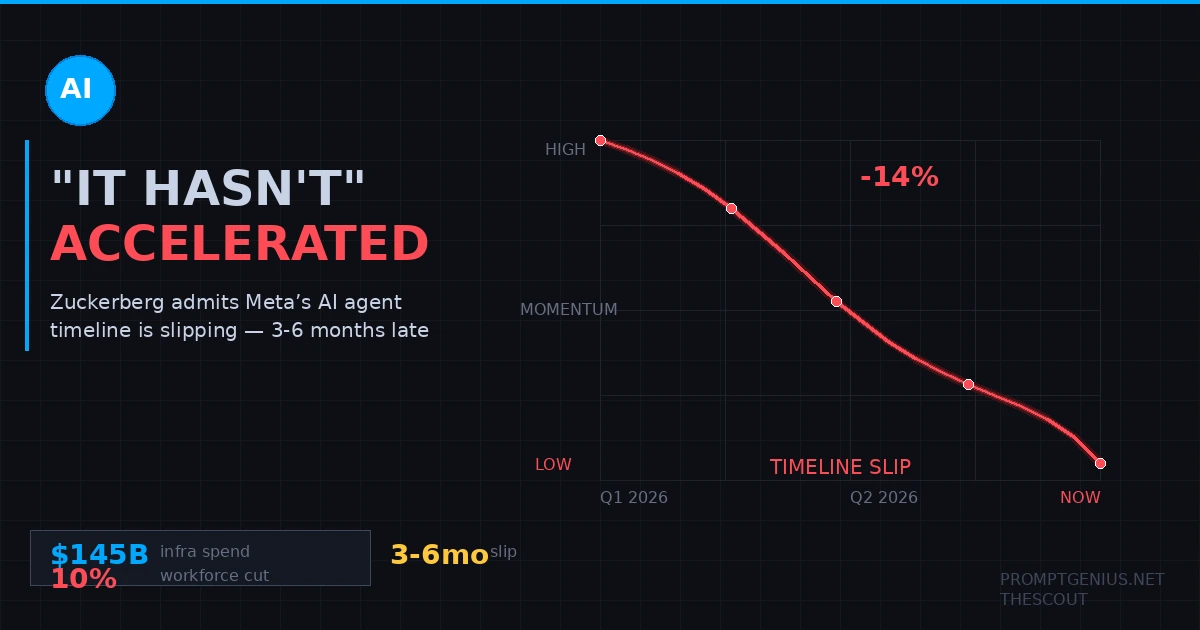
"It Hasn't Accelerated" — Zuckerberg Admits Meta's AI Agent Push Is Slipping
Mark Zuckerberg told employees in a leaked town hall that Meta's AI agent progress over the last four months 'hasn't really accelerated in the way that we expected.' The CEO who bet his company's entire restructuring on agents is now pushing timelines out 3-6 months. This is the biggest signal yet that production AI agents at scale are harder than anyone planned for.
 #deepseek
Frontier Agent Benchmarks: DeepSeek V4 vs Qwen 3.8
DeepSeek V4 vs Qwen3.8-Max across agentic benchmarks: verified scores, vendor-reported caveats, pricing, and which model fits your workload.
 #qwen
Qwen3.8-27B: Local Coding Agents, and the Overthinking Problem
Qwen3.8-27B is an Apache 2.0 local agent model that beats Claude Opus 4.8 on agentic tasks — but its default reasoning over-thinks. Setup, MTP, and the right settings.