Master Gemini Prompts: Complete Strategy Guide
Unlock Gemini's full potential with specialized prompt strategies for multimodal understanding, 1M+ token context, built-in code execution, and Google Search grounding. Proven techniques for Google's most advanced model family.
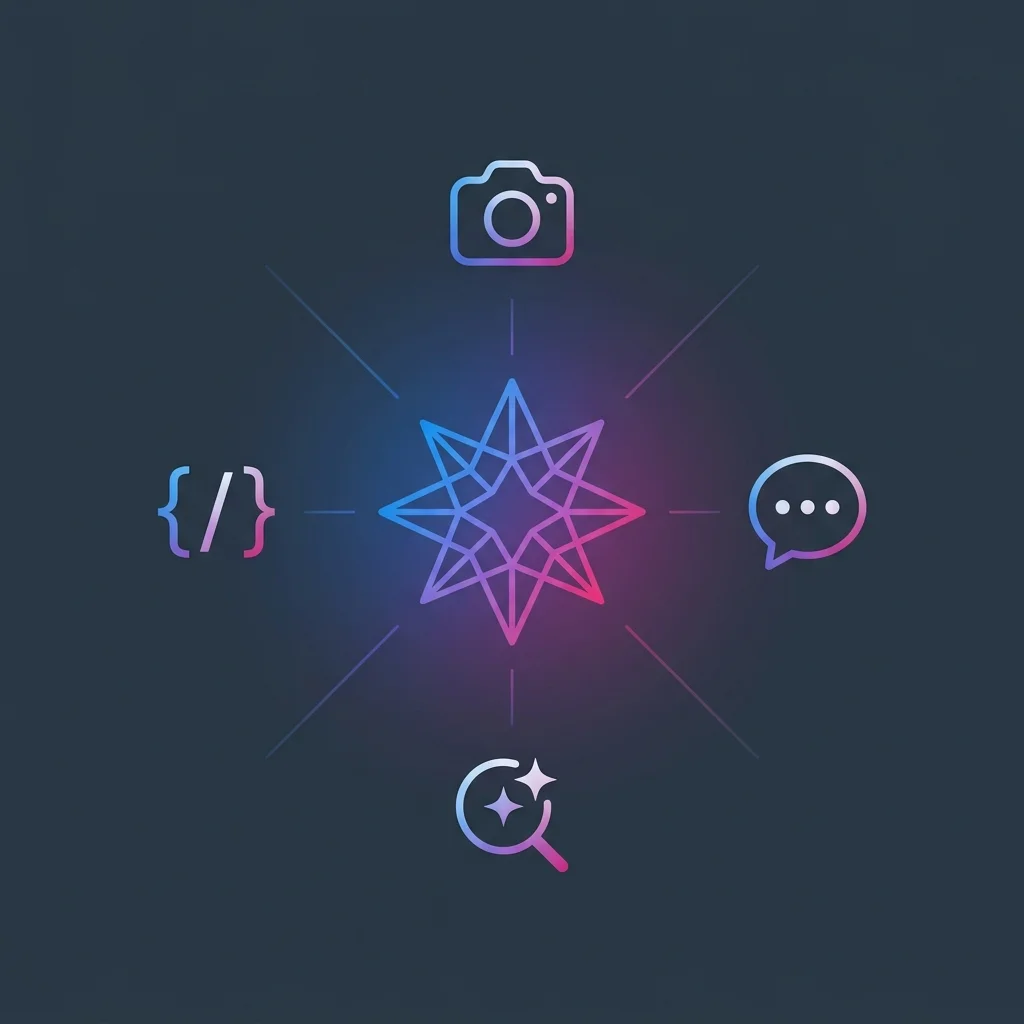
Gemini is Google's family of multimodal AI models, and it behaves differently from any other LLM you've used. It natively understands images, audio, and video without bolt-on vision modules. It holds up to 2 million tokens in context. It can execute Python code inside its responses. It can ground answers against live Google Search. And it gives you fine-grained control over safety filtering.
These aren't marketing bullet points. Each capability demands its own prompting approach. The strategies that work on ChatGPT or Claude often produce mediocre results on Gemini — and vice versa.
This guide covers every dimension of Gemini prompt engineering: system instruction design, multimodal workflows, 1M-token context management, code execution patterns, search grounding, function calling, structured output, and domain-specific techniques for research, creative work, business, and education.
Whether you're using Gemini 2.5 Pro for deep reasoning, Gemini 2.5 Flash for high-throughput tasks, or the Gemini API directly, you'll find production-ready prompt templates and anti-patterns to avoid.
Note:
Pro move: Gemini's native multimodal handling means you can interleave images, audio, and video directly in your prompts without pre-processing. This changes everything about how you structure complex workflows. Skip the "describe this image" preamble — Gemini already sees it.
What You'll Find Here
System Instructions
How Gemini interprets system prompts, persona crafting techniques, and configuring Google's safety settings to balance helpfulness with harm prevention. Gemini's system instruction behavior differs meaningfully from Claude and OpenAI models.
Multimodal Prompting
The art of prompting with images, video, and audio. Gemini was built multimodal from the ground up — learn how to construct prompts that leverage visual analysis, video understanding, and speech processing in a single request.
Long Context (1M+)
Strategies for working with Gemini's massive context window. From needle-in-haystack retrieval to full-book analysis, context caching for cost optimization, and chunked prompting patterns for multi-document research.
Code & Execution
Gemini's built-in Python sandbox changes the game for data analysis, computation, and self-verification. Plus code generation patterns, and how to use Google Search grounding to reduce hallucinations in technical answers.
Domain Applications
Real-world Gemini workflows for academic research, creative writing, business strategy, and education. Each domain section includes battle-tested prompt chains and output examples.
Advanced Techniques
Structured output with JSON schema enforcement, function calling for tool integration, streaming real-time multimodal interactions, and Gemini Live API patterns for latency-sensitive applications.
Getting Started
New to Gemini prompting? Start with System Instructions to understand how Gemini thinks, then move to the Multimodal Prompting section — multimodal is where Gemini truly shines over competing models.
If you're coming from ChatGPT or Claude, pay special attention to the Safety Settings page. Gemini's configurable safety filters trip up more prompt engineers than any other feature.
Related Articles & Guides
Gemini Code Generation & Execution: Complete Guide
Master Gemini's built-in code execution sandbox, code generation patterns, and Google Search grounding. Learn to prompt for self-verifying code and reduced hallucinations.
Gemini Multimodal Prompting: Images, Video & Audio
Master Gemini's native multimodal capabilities. Learn how to prompt with images, video, and audio simultaneously for richer, more accurate results than text-only approaches.
Gemini Image Analysis: Visual Understanding Prompts
Master image prompting with Gemini. Learn prompt patterns for chart analysis, OCR, visual reasoning, screenshot interpretation, and extracting structured data from images.