Painting Styles SREF Codes for Midjourney
Master Midjourney painting styles with curated SREF codes for watercolor, oil, and acrylic aesthetics. Technical guide with examples and best practices.
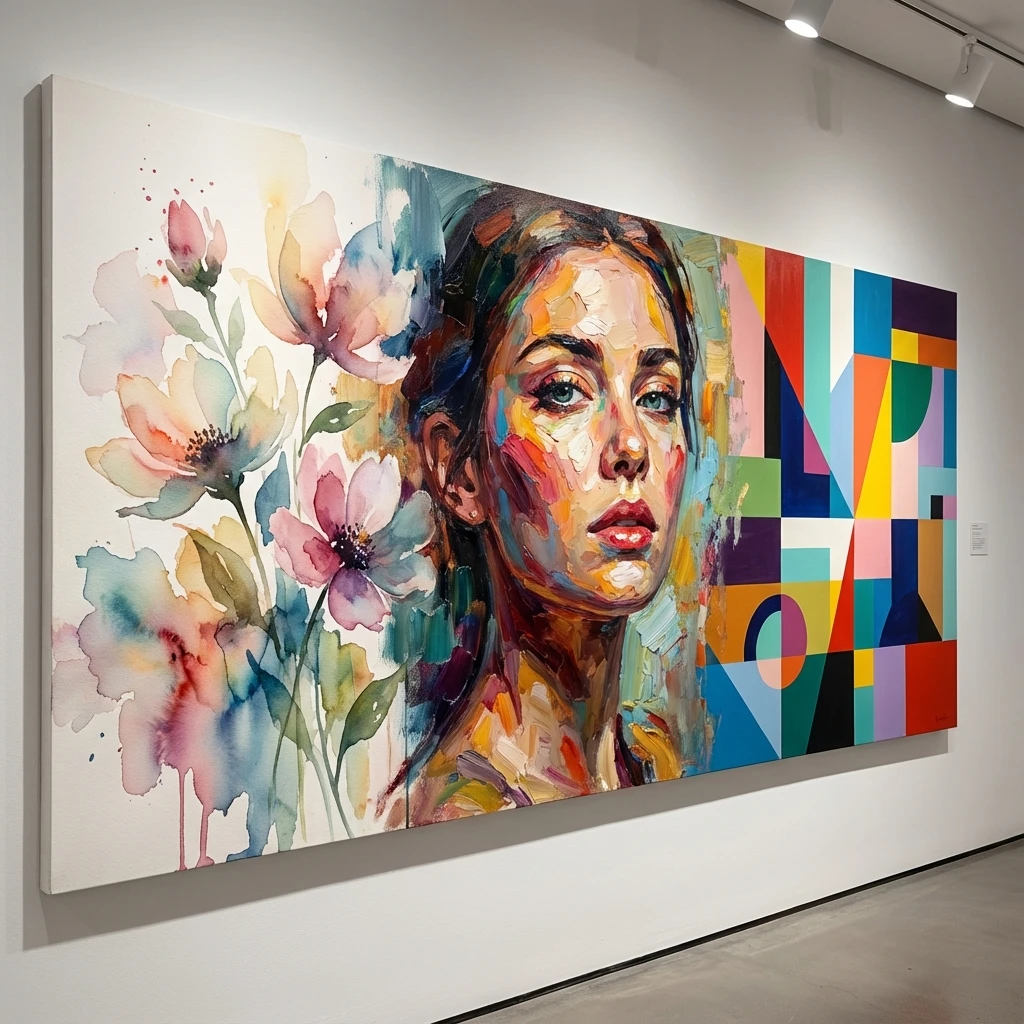
Introduction
SREF codes (style reference codes) are powerful tools for applying specific artistic aesthetics to your Midjourney generations. This guide covers curated painting style references that capture everything from classical oil painting techniques to contemporary watercolor effects. Whether you're creating fine art commissions, book illustrations, or gallery-quality pieces, these codes help you achieve consistent, professional-looking results with authentic brush textures and color palettes.
Understanding how to layer SREF codes with the right --sw (style weight) values gives you fine-grained control over the final aesthetic. We'll explore traditional techniques alongside modern interpretations, helping you choose the right style for your specific vision.
When to Use Painting Styles
Painting SREF codes excel in several scenarios:
- Fine Art Commissions: Achieve gallery-quality results with authentic artistic styles
- Book Illustrations: Maintain consistent visual style across multiple illustrations
- Historical Recreations: Capture period-accurate painting techniques and aesthetics
- Concept Art: Blend painting styles with other references for unique hybrid visuals
- Portrait Work: Use oil or watercolor codes for elegant character designs
SREF Code Collection
Painting styles vary significantly in technique, texture, and visual impact. Below are carefully selected SREF codes organized by painting technique, each with specific use cases and technical guidance.
Watercolor Techniques
Soft Watercolor Nature
Code: --sref 2653204188
Gentle, colorful style with flowing washes and natural color bleeding. Perfect for capturing the translucent, organic quality of watercolor on paper.
Best for: Gardens, florals, nature illustrations, soft portraits, botanical art, landscape studies
Recommended weight: --sw 100-150
Version compatibility: V6, V7, Niji 6
Example prompt:
/imagine a peaceful garden with cherry blossoms and stone pathway --sref 2653204188 --sw 120 --niji 6
Pro Tip:
Works exceptionally well for botanical illustrations. Increase --sw to 150-200 for a stronger watercolor effect with more pronounced pigment blooms.
Vibrant Watercolor Impressionist
Code: --sref 3847291650
Bold, expressive watercolor with vivid hues and loose brushwork. Captures the energy and movement of impressionist techniques.
Best for: Expressive landscapes, dynamic scenes, atmospheric paintings, travel sketches
Recommended weight: --sw 110-160
Version compatibility: V6, V7, Niji 6
Example prompt:
/imagine a Venetian canal at sunset with gondolas --sref 3847291650 --sw 130 --ar 16:9
Oil Painting Techniques
Traditional Oil Painting
Code: --sref 178455688
Thick brushstrokes, rich colors, and classic oil painting texture. Emulates traditional Renaissance and Baroque painting techniques with visible impasto.
Best for: Portraits, classical landscapes, historical scenes, dramatic compositions, museum-quality artwork
Recommended weight: --sw 120-180
Version compatibility: V6, V7
Example prompt:
/imagine a Renaissance-style portrait of a noblewoman in candlelight --sref 178455688 --sw 150
Note:
Avoid redundant style descriptions when using SREF. Don't say "oil painting portrait" with this code—the aesthetic is already defined by the SREF value.
Contemporary Oil Portrait
Code: --sref 2891736420
Modern oil painting style with bold colors and visible brushstrokes. Balances classical technique with contemporary sensibilities.
Best for: Modern portraiture, figure studies, expressive still life, character design
Recommended weight: --sw 100-140
Version compatibility: V6, V7
Example prompt:
/imagine a modern figure study with warm earth tones --sref 2891736420 --sw 125
Acrylic & Mixed Media Techniques
Vibrant Acrylic Abstract
Code: --sref 4156832891
Bold, geometric acrylic with sharp color transitions and modern edge definition. Great for contemporary and abstract work.
Best for: Abstract compositions, geometric designs, modern art, graphic-inspired paintings
Recommended weight: --sw 100-150
Version compatibility: V6, V7
Example prompt:
/imagine an abstract composition with geometric shapes and primary colors --sref 4156832891 --sw 120
Textured Mixed Media
Code: --sref 5029184763
Layered, textured appearance combining multiple media effects. Adds depth and dimensional quality to compositions.
Best for: Textured art, collage-inspired pieces, experimental work, surface-rich paintings
Recommended weight: --sw 80-130
Version compatibility: V6, V7
Example prompt:
/imagine a textured abstract with mixed media layers and metallic accents --sref 5029184763 --sw 110
Specialized Painting Styles
Gouache – Matte & Opaque
Code: --sref 7342891056
Opaque watercolor-like appearance with matte finish. Combines the fluidity of watercolor with the coverage of acrylic.
Best for: Illustration, character design, animation pre-production, graphic painting, editorial art
Recommended weight: --sw 95-140
Version compatibility: V6, V7, Niji 6
Example prompt:
/imagine a fantasy character portrait in gouache style with vibrant colors --sref 7342891056 --sw 115
Ink Wash Painting
Code: --sref 6184937210
Traditional Asian ink painting aesthetic with flowing washes and stark contrast. Minimal color palette with expressive brushwork.
Best for: Minimalist landscapes, botanical studies, zen-inspired art, calligraphy-influenced work
Recommended weight: --sw 100-160
Version compatibility: V6, V7
Example prompt:
/imagine a minimalist mountain landscape in ink wash style --sref 6184937210 --sw 140
Pastel & Soft Chalks
Code: --sref 8291047563
Soft, blended appearance with gentle color transitions. Captures the velvet texture and subtle gradations of pastel media.
Best for: Soft portraits, dreamy landscapes, intimate scenes, color studies, gentle emotional pieces
Recommended weight: --sw 110-150
Version compatibility: V6, V7, Niji 6
Example prompt:
/imagine a soft pastel portrait of a figure in warm candlelight --sref 8291047563 --sw 125
Impasto Expressionist
Code: --sref 9174628051
Heavy, textured brushwork with visible paint build-up. Creates dramatic, emotional impact through technique.
Best for: Expressive portraiture, emotional landscapes, dramatic scenes, contemporary fine art
Recommended weight: --sw 120-170
Version compatibility: V6, V7
Example prompt:
/imagine an expressionist portrait with heavy brushstrokes and emotional intensity --sref 9174628051 --sw 145
Historical & Period Styles
Classical Academic
Code: --sref 3756284019
Formal classical painting technique with academic precision. Smooth blending, realistic proportions, museum-standard finish.
Best for: Historical reconstructions, academic figure studies, classical subjects, formal portraiture
Recommended weight: --sw 130-170
Version compatibility: V6, V7
Example prompt:
/imagine a classical academic study of draped fabric and classical forms --sref 3756284019 --sw 150
Art Deco Illustration
Code: --sref 4829173056
Geometric, stylized illustration style characteristic of the Art Deco movement. Sharp lines, bold colors, ornamental details.
Best for: Poster design, fashion illustration, vintage-inspired work, decorative compositions
Recommended weight: --sw 100-140
Version compatibility: V6, V7
Example prompt:
/imagine an Art Deco-inspired illustration of a glamorous figure --sref 4829173056 --sw 120
Understanding Style Weight (--sw)
The --sw parameter controls how strongly the SREF style influences your generation. Different painting styles respond differently to weight adjustments:
- Low weight (50-75): Subtle style influence, preserves detail and subject matter
- Medium weight (100-140): Balanced style application, recommended for most use cases
- High weight (150-200): Strong style dominance, ideal for artistic interpretations
- Very high (200+): Can distort details and subject recognition
When combining multiple SREF codes, use lower individual weights (50-75) to blend styles without overwhelming the composition. Start with the strategy guide's recommended range and adjust based on your results.
Combining Multiple Painting Styles
Layering painting styles creates unique hybrid aesthetics. Use the ::weight syntax to blend codes:
/imagine a coastal landscape with dramatic sky --sref 2653204188::0.8 178455688::0.5 --sw 100
This example blends watercolor nature with traditional oil painting, creating a mixed-media effect. The first code gets higher influence (0.8) while the second adds texture (0.5).
Blending tips:
- Start with similar style families (two watercolors, two oils) before experimenting with contrasts
- Keep combined weights moderate (0.5-1.0 each) to maintain visual coherence
- Test in isolation first, then layer additional SREF codes
Style Weight Best Practices
For realistic results: Use --sw 100-120 with minimal additional style descriptors. The SREF code already defines the aesthetic.
For artistic interpretation: Push to --sw 150-180 to emphasize brushwork and technique over photorealism.
For subtle influence: Keep --sw 50-75 when using SREF alongside other specialized parameters like camera angles or lighting modifiers.
Avoid common mistakes:
- Don't describe the painting technique in your prompt when using SREF ("oil painting portrait" is redundant)
- Don't exceed
--sw 200unless intentionally seeking abstract/distorted results - Don't stack conflicting art movement codes (impressionism + hyperrealism) without clear artistic intent
Combining Painting SREF with Other References
Painting styles work well alongside other SREF codes. For instance, combine the Artistic Fine Art SREF collection for more refined control, or layer with illustration and composition styles for hybrid effects.
When using multiple references:
- Paint styles are typically dominant, so apply them with standard weights (100-140)
- Supporting references should use lower weights (30-60) to complement without competing
- Test the combination with a simple subject first before expanding to complex compositions
Recommended Style Combinations
Watercolor + Ink Wash (Asian aesthetic):
/imagine a zen garden landscape --sref 2653204188::0.6 6184937210::0.7 --sw 90
Oil + Classical Academic (Old Master style):
/imagine a Renaissance still life with fruit --sref 178455688::0.8 3756284019::0.5 --sw 130
Acrylic + Expressionist (Contemporary energy):
/imagine a vibrant urban street scene --sref 4156832891::0.7 9174628051::0.6 --sw 120
Troubleshooting Painting Styles
Issue: Style appears too subtle
- Increase
--swvalue by 20-30 points - Reduce competing style descriptors in your prompt
- Use a single, well-defined SREF code rather than layering multiple styles
Issue: Subject details are lost
- Decrease
--swto 80-100 range - Add more descriptive subject details to your prompt
- Use a more specific SREF code rather than a general painting style
Issue: Colors feel washed out
- Adjust color descriptors in your prompt explicitly
- Try a different painting style code (e.g., switch watercolor for gouache)
- Increase contrast by specifying "dramatic lighting" or "high contrast"
Issue: Results are too painterly/unrealistic
- Lower
--swbelow 100 - Reconsider if a painting SREF is appropriate for your subject matter
- Try acrylic or contemporary styles instead of classical techniques
Related Articles & Guides
Artistic Styles SREF Codes for Midjourney
Explore SREF codes for artistic styles in Midjourney. Master oil painting, watercolor, ink illustration, and fine art aesthetics to enhance your prompts.
 #midjourney
Fine Art Style SREF Codes for Midjourney
Discover curated Midjourney SREF codes for fine art aesthetics including classical, modern, and contemporary art movements. Complete guide with examples and tips.
Midjourney Cheat Sheet 2026
All Midjourney parameters, aspect ratios, SREF codes, and settings in one reference. Updated for Midjourney v6 and v7.