Editorial Poster & Infographic Prompting
Master the Art Director Framework to generate commercial-grade editorial posters, photo-to-infographic analysis cards, and structured knowledge diagrams across GPT-Image-2, FLUX, and Midjourney.
The biggest mistake developers and designers make when prompting modern image foundation models is treating the prompt box like a search engine.
They stuff adjectives: "masterpiece, 8k resolution, ultra-detailed, photorealistic, cinematic lighting, trending on ArtStation."
The result is almost universally the same: cluttered "AI slop." The model fills every available pixel with visual noise, text dissolves into illegible glyphs, and the composition has zero hierarchy, zero brand utility, and zero negative space.
Over the past few months, creators like xiaoxiaodong01 (小小东) and top visual AI designers have demonstrated a completely different methodology: The Art Director Framework and the Input-to-Infographic Architecture.
Instead of describing a scene's vibe, you structure the prompt as an unambiguous design brief. By strictly locking canvas geometry, negative space ratios, vector callout lines, and typography hierarchy, you force diffusion and autoregressive image models (GPT-Image-2, DALL-E 3, FLUX.1, Nano Banana 2, and Midjourney v7) to generate production-ready commercial posters and structured knowledge cards.
Note:
The Art Director Framework is model-agnostic. By defining geometry, proportion, and negative space boundaries rather than tool-specific parameter hacks, the exact same prompt translates seamlessly across OpenAI, Google, and Black Forest Labs models.
The Problem with Unconstrained Diffusion
Diffusion transformers do not inherently understand "good taste" or "graphic design." They optimize for pattern completion across latent noise.
When you give a loose prompt like:
"A luxury watch advertisement poster with text reading CHRONO"
The model struggles with three distinct failure modes:
- Semantic Crowding: Without spatial boundaries, the model places the watch directly in the center and spreads decorative elements across all four corners, leaving no room for copy.
- Text-Texture Blending: When text instructions lack a defined background quadrant, the text generator attempts to draw letters directly over complex micro-textures (e.g. watch gears or marble veins), causing severe rendering artifacts.
- Palette Bleed: Unconstrained color descriptors cause ambient bounce light to bleed into the background, destroying the crisp contrast required for modern commercial print.
┌─────────────────────────────────────────────────────────────┐
│ 1. CANONICAL LAYOUT & CANVAS PROPORTION                     │
│    • Aspect ratio constraint (3:4 vertical standard)        │
│    • Explicit spatial split (65% visual / 35% type floor)   │
├─────────────────────────────────────────────────────────────┤
│ 2. MONOLITHIC SUBJECT & NEGATIVE SPACE LOCK                 │
│    • Singular focal point (travertine stone, chrome sphere) │
│    • Solid flat backdrop (#121212, warm cream, raw paper)   │
│    • 45-degree directional key shadow                       │
├─────────────────────────────────────────────────────────────┤
│ 3. TYPOGRAPHIC HIERARCHY & ANNOTATION DIRECTIVES            │
│    • Primary Header: Large Swiss/Grotesk sans-serif text    │
│    • Sub-header: Monospaced technical metadata / year       │
│    • Vector callouts: Thin 1px line pointers with arrows    │
├─────────────────────────────────────────────────────────────┤
│ 4. COLOR PALETTE RESTRICTION                                │
│    • Strict 3-tone limit (e.g. Cobalt #0047AB, Off-White,   │
│      Matte Charcoal)                                        │
└─────────────────────────────────────────────────────────────┘
The 4-Layer Art Director Framework
To achieve deterministic layout control across models, the prompt must be broken into 4 non-negotiable structural layers:
1. Canonical Layout & Grid Split
2. Monolithic Subject & Negative Space
3. Typographic Hierarchy & Callouts
4. Palette & Lighting Restriction
Production Prompt Templates
1. The Traditional Palmistry & Physiognomy Infographic Card
Best for: Viral social engagement, structured photo-to-card transformations, cultural metaphysics design.
Role: You are a master physiognomy expert proficient in traditional Chinese palmistry (麻衣相法) and aesthetic editorial design. Task: Analyze the user-provided palm photograph and generate a high-end, magazine-style Chinese Palmistry Analysis Chart in vertical 3:4 aspect ratio. [ASSET PRESERVATION & COMPOSITION] - Maintain the original hand shape, palm proportions, and real skin tones of the input photo. - Clean 3:4 vertical card layout with a warm parchment / aged Xuan paper background texture (#F5EFEB). - The annotated hand is positioned centrally with generous negative space surrounding it. [ANNOTATION & CALLOUT DIRECTIVES] - Overlay clean, thin red and black vector annotation lines pointing accurately to major palm creases: * 生命线 (Life Line): Vitality, stamina, and life trajectory. * 智慧线 (Wisdom Line): Intellect, mental focus, and decision-making style. * 感情线 (Heart Line): Emotional depth, relationships, and temperament. * 事业线 (Fate/Career Line): Ambition, career stability, and key milestone ages. - Use numbered badge callouts (①, ②, ③) connected to the crease paths with fine dashed guide lines. [TYPOGRAPHY & HIERARCHY] - Top Header: Traditional Calligraphy title reading "手相精批 · 命理命盘" in deep vermilion red (#C02C38). - Sub-header: Minimalist seal stamp graphic (朱文印章) in the upper corner. - Side/Bottom Analysis Grid: Three structured metadata blocks with elegant Ming/Song-style typography (宋体) detailing Five-Element hand classification (金木水火土), Line Depth analysis, and Life Advice. [LIGHTING & RENDER] Soft even studio lighting, zero harsh glare, crisp vector line overlays, authentic editorial print texture, matte finish.
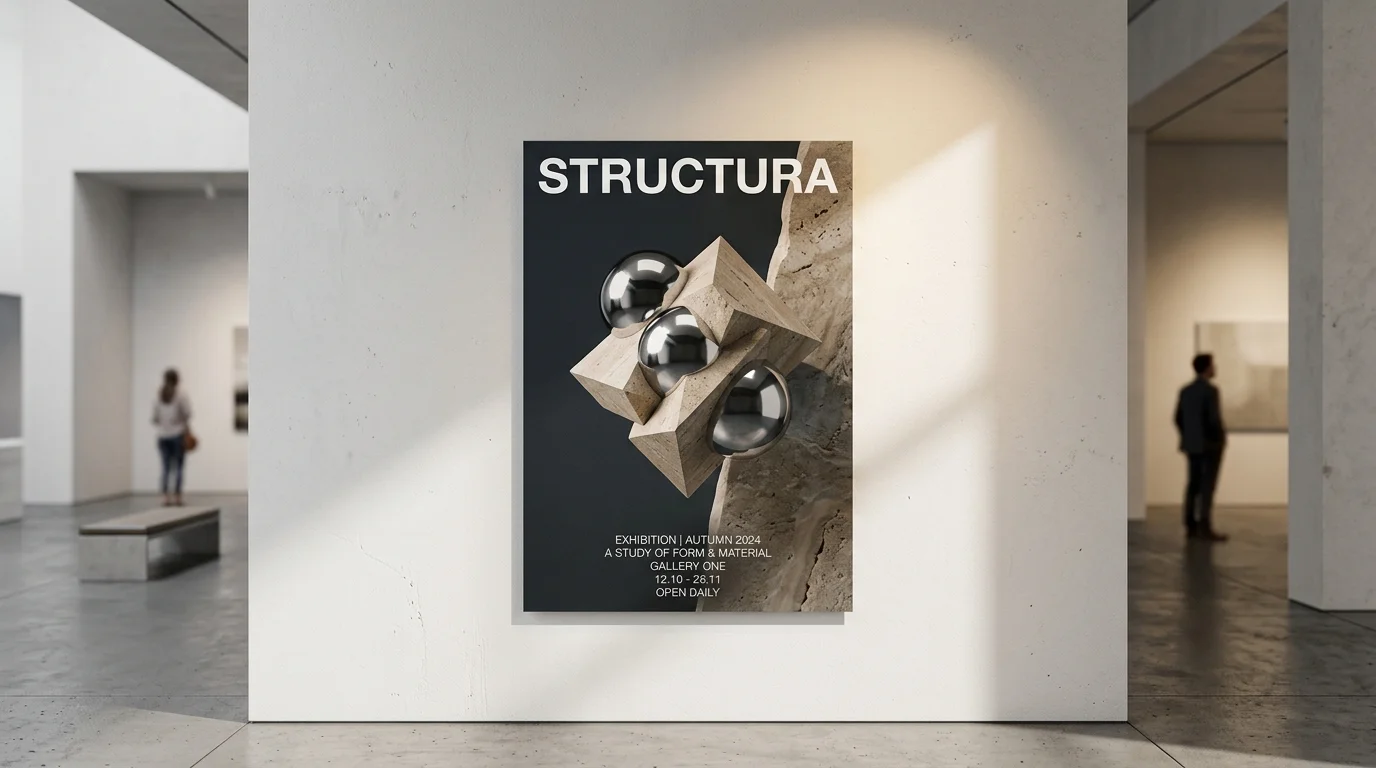
2. The Monolithic Conceptual Exhibition Poster
Best for: Brand identity, luxury goods, architectural studios, hardware keynotes.
A minimalist high-fashion editorial exhibition poster in vertical 3:4 aspect ratio. [COMPOSITION & GRID] Strict two-section vertical layout. The upper 65% features a solitary monolithic geometric sculpture composed of polished chrome and raw pitted travertine stone resting on a flat plane. The lower 35% is reserved for clean typography on a solid matte charcoal (#18181b) background. Generous negative space surrounds the sculpture. [TYPOGRAPHY] - Large bold Swiss Grotesk sans-serif headline in pure white reading "STRUCTURA" - Beneath the headline, a thin horizontal line separates a small monospaced subtitle in muted grey reading "EXHIBITION 2026 // MILAN" - Clean, razor-sharp letterforms with generous kerning. [LIGHTING & COLOR] Single hard directional key light at a 45-degree angle casting a crisp, elongated shadow to the right. Strict 3-tone color palette: Brushed Chrome, Warm Travertine, and Deep Charcoal. Matte fine-art paper texture, zero film grain, zero lens flare, vector-sharp edges.
3. The Technical Hardware Blueprint Spec Sheet
Best for: Developer tools, hardware teardowns, engineering posters.
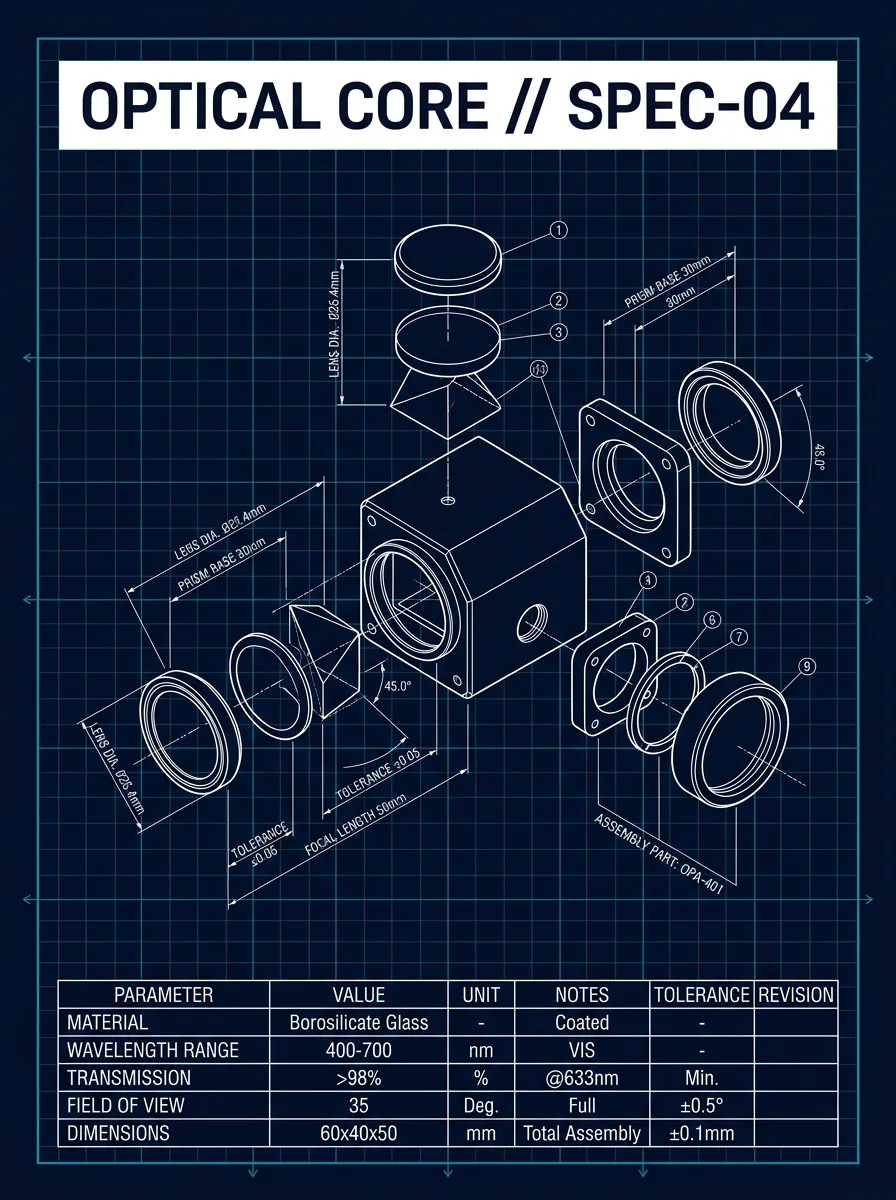
A precision technical engineering poster in vertical 3:4 format. [COMPOSITION] Technical isometric blueprint aesthetic on a solid deep navy (#0A1128) matte background. Center visual features an exploded isometric view of an optical prism lens assembly with fine white technical dimension callouts. [TYPOGRAPHY] - Top banner: Bold monospaced header reading "OPTICAL CORE // SPEC-04" - Bottom grid: Two-column technical spec table with precise decimal coordinates, focal lengths, and serial numbers in sharp white vector typography. - Fine 1px cyan grid lines subtly visible in the background. [PALETTE & RENDER] Restricted palette: Deep Navy, Signal Cyan, and Crisp White. Sharp vector lines, blueprint diagram precision, zero blur, studio technical draftsmanship.
4. The High-Key Botanical & Cosmetic Editorial
Best for: Skincare, organic products, editorial magazine covers.
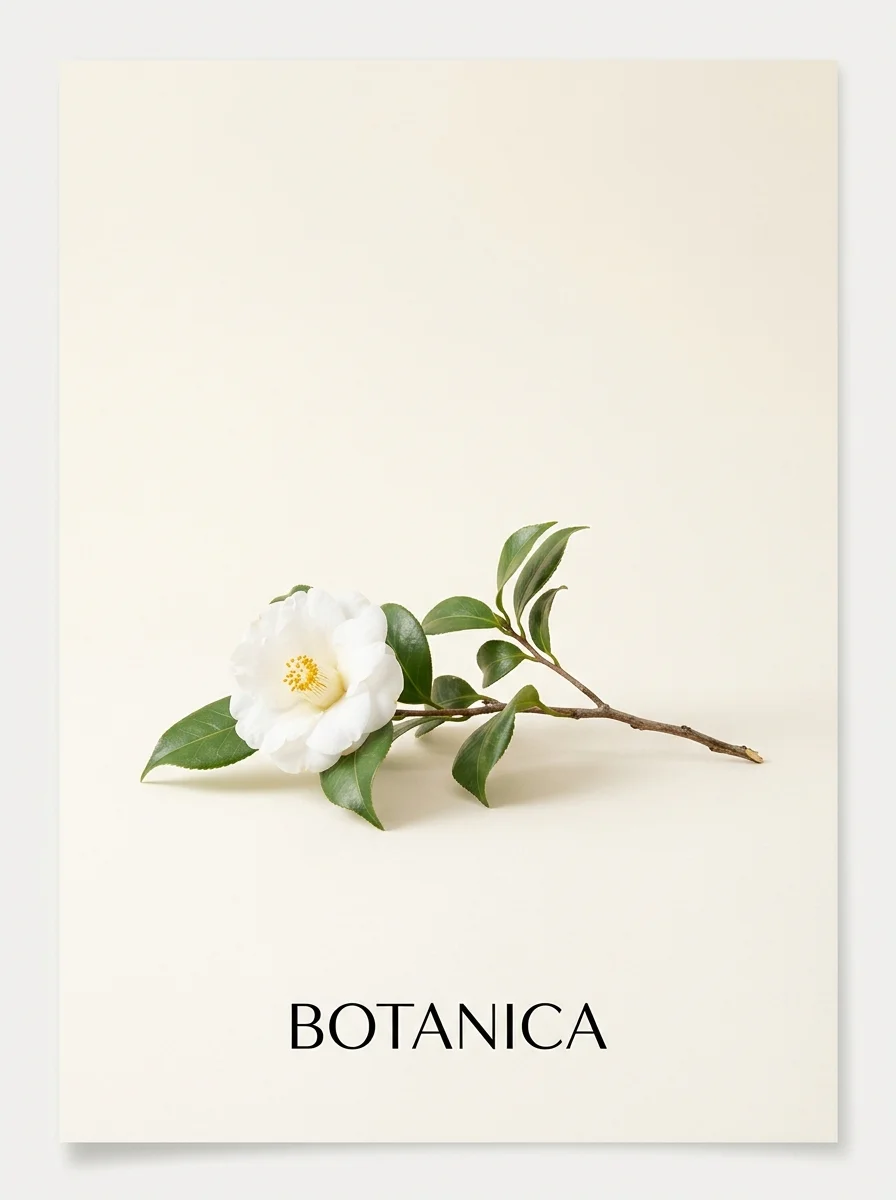
A clean Japanese minimalist editorial brand poster in vertical 3:4 format. [COMPOSITION] Asymmetrical composition on a solid warm ivory (#FDFBF7) background. A single stem of a blooming white camellia rests horizontally across the upper third, casting a delicate translucent shadow downward. 70% of the canvas is pure negative space. [TYPOGRAPHY] - Upper right quadrant: Vertical traditional Japanese typography aligned cleanly. - Lower third: High-contrast modern serif title reading "BOTANICA" in deep forest green. - Bottom footer: Minimalist product volume and origin details in tiny sans-serif print. [LIGHTING] Bright diffused morning daylight, high-key studio lighting with soft micro-shadows. Palette: Warm Ivory, Botanical Emerald, Pure White. Crisp print texture, editorial fashion publication aesthetic.
Cross-Model Translation Matrix
Model Translation Reference
Values: quality: hd, aspect_ratio: 3:4
Values: Guidance scale: 3.5, 28 steps
Values: Natural prompt mode, 3:4 or 9:16
Values: --ar 3:4 --style raw
Summary Checklist for Creators
Production Verification Gate
Before running a commercial poster or infographic generation, verify these 5 constraints in your prompt:
- Aspect Ratio Declared: Is the canvas locked to 3:4 or 9:16?
- Spatial Division Explicit: Did you allocate a specific percentage (e.g. top 65%) to the visual and reserve the rest for copy?
- Negative Space Enforced: Is there a named solid background color to prevent ambient clutter?
- Exact Text Strings in Quotes: Are all required text elements explicitly typed out (e.g. `reading "STRUCTURA"`) with font style specified?
- Color Count Capped: Is the palette limited to 3 named, high-contrast tones?
Related Articles & Guides
 #Midjourney
Midjourney Character Creation: Master AI Prompts for Unique Designs
Master Midjourney character creation with AI prompts. Learn advanced techniques for generating compelling characters across diverse styles and genres, from portraits to fantasy beings, with detailed guides and examples.
 #Gemini
Master Gemini Prompts: Complete Strategy Guide
Unlock Gemini's full potential with specialized prompt strategies for multimodal understanding, 1M+ token context, built-in code execution, and Google Search grounding. Proven techniques for Google's most advanced model family.
Gemini Function Calling: Tool Integration & Multi-Tool Patterns
Master Gemini's function calling for tool integration. Design effective function declarations, orchestrate multiple tools, handle errors, and minimize unnecessary function calls.