Academic Writing Resources
Enhance your academic writing with our comprehensive collection of ChatGPT prompts designed for research, essays, and scholarly work.

Transform your academic writing process with AI-powered prompts designed by educators and researchers. Whether you're tackling your first literature review or refining your dissertation methodology, these specialized prompts help you think more clearly, write more effectively, and research more efficiently.
Our comprehensive collection covers every aspect of academic work—from structuring essays and conducting literature reviews to preparing for exams and mastering citation formats. Each prompt is crafted to guide you through complex academic tasks while maintaining the rigor and integrity expected in scholarly work.
Note:
Academic Integrity Reminder: Use these prompts as thinking partners and research assistants, not as content generators. Always verify facts, cite sources properly, and ensure your work reflects your own understanding and analysis. For developers working on academic projects, explore our cursor rules for research workflows to streamline your development process.
What You'll Find Here
Our academic writing resources are organized into three main categories to help you find exactly what you need.
Core Writing Resources
Essential tools for structuring and crafting academic papers:
- Essay Structure: Learn how to organize your ideas and create compelling academic arguments
- Essay Writing: Master the art of academic essay writing from start to finish
- Creative Writing: Develop your creative writing skills for academic projects
Research & Analysis
Comprehensive support for research methodology and scholarly analysis:
- Research Assistant: Get help with research methodology, literature searches, and data analysis
- Research Methodology: Learn essential research methods and techniques
- Literature Review: Master the art of synthesizing and analyzing scholarly sources
Citation & Presentation Tools
Professional tools for citations, presentations, and exam preparation:
- Citation Guide: Generate and format citations in various academic styles
- Presentation Guide: Create effective academic presentations and speeches
- Exam Preparation: Develop comprehensive exam preparation strategies
Who Should Use These Resources
These prompts are designed for a diverse academic community:
- Undergraduate students: Structure essays, prepare for exams, and develop critical thinking skills
- Graduate researchers: Conduct literature reviews, design research methodologies, and analyze data
- Educators: Create assignments, develop rubrics, and provide feedback frameworks
- Independent researchers: Organize research projects and maintain scholarly standards
Use Cases by Discipline
Humanities
- Analyze primary sources and historical documents with guided reading prompts
- Develop thesis statements and argument frameworks for persuasive essays
- Structure comparative analyses across texts, periods, or cultural contexts
Sciences
- Formulate research questions and testable hypotheses
- Design experimental methodologies with appropriate controls
- Interpret statistical results and suggest follow-up studies
- Create lab report structures with proper scientific formatting
Social Sciences
- Develop survey questions and interview protocols
- Structure case study analyses and comparative research
- Analyze qualitative data with thematic coding frameworks
- Write literature reviews that synthesize multiple sources
Business & Professional Programs
- Structure case study analyses for MBA and professional programs
- Develop business plans and market analysis frameworks
- Create persuasive executive summaries and reports
- Prepare for case interviews with structured response frameworks
How to Use These Prompts
Getting started with our academic writing prompts is straightforward:
- Choose the appropriate category for your academic task based on your current needs
- Review the provided prompts and examples to understand the structure and approach
- Customize the prompts to fit your specific field, topic, and requirements
- Use ChatGPT's responses as a starting point for your work, not the final product
- Verify and fact-check all generated content against authoritative academic sources
- Refine and personalize the output to reflect your own voice and understanding
Best Practices for AI-Assisted Academic Work
To get the most value from these prompts while maintaining academic integrity:
- Be specific about your academic field, assignment requirements, and learning objectives
- Provide context including relevant background information, key concepts, and constraints
- Iterate and refine ChatGPT's output through follow-up questions and clarifications
- Verify information from authoritative academic sources and peer-reviewed literature
- Cite properly using the appropriate citation style for your field (APA, MLA, Chicago, etc.)
- Use AI as a tool for brainstorming, structuring, and refining—not as a replacement for original thought
- Maintain your voice by ensuring the final work reflects your own analysis and understanding
For more guidance on effective prompting techniques, check out our ChatGPT prompting strategies across different domains.
Related Articles & Guides
 #academic-writing
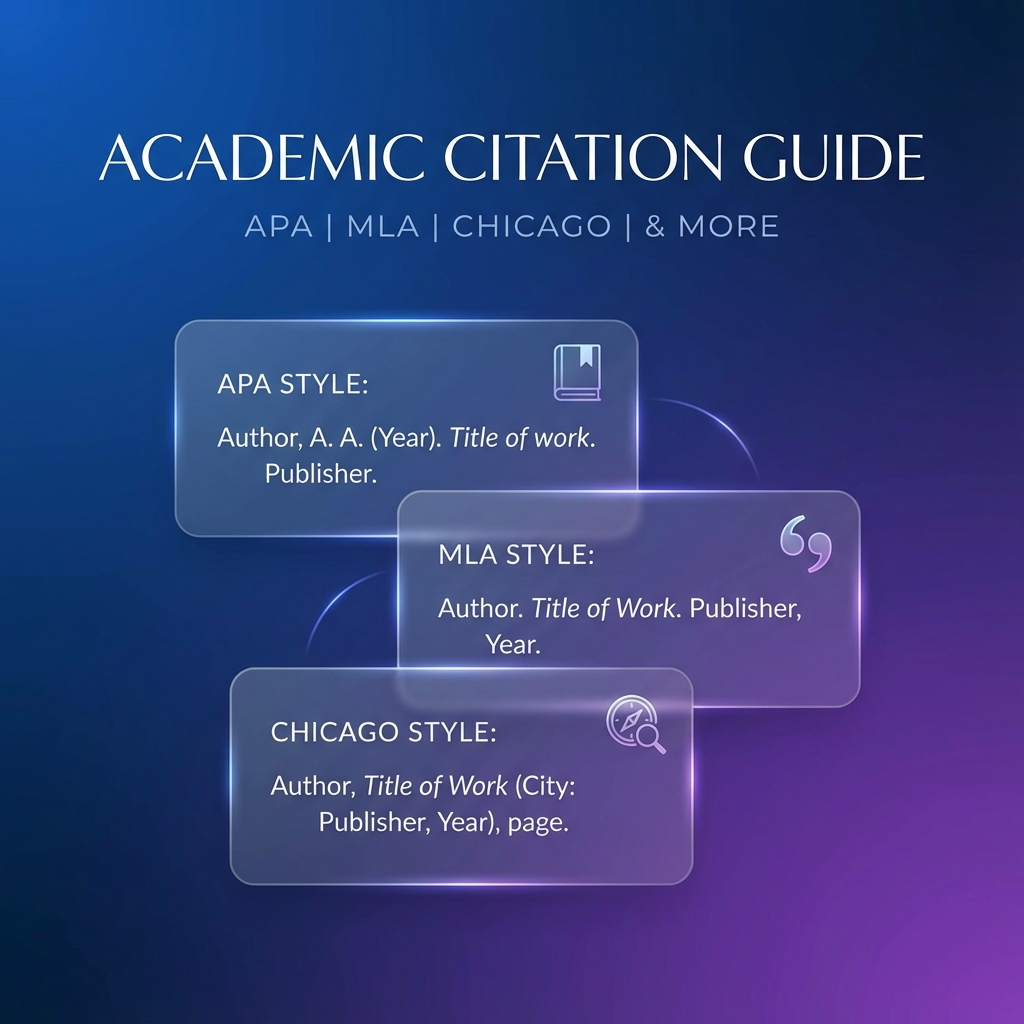
Academic Citation Guide
Master academic citations with these comprehensive prompts designed to help you properly cite sources, manage references, and handle complex citation scenarios in academic writing.
 #essay-writing
Essay Writing Guide
Master academic essay writing with these ChatGPT prompts designed to help you plan, write, and polish your essays effectively.
 #literature-review
Literature Review Guide
Master the art of literature review with ChatGPT prompts designed to help you analyze and synthesize academic sources effectively.